2019 / editorial
Welcome
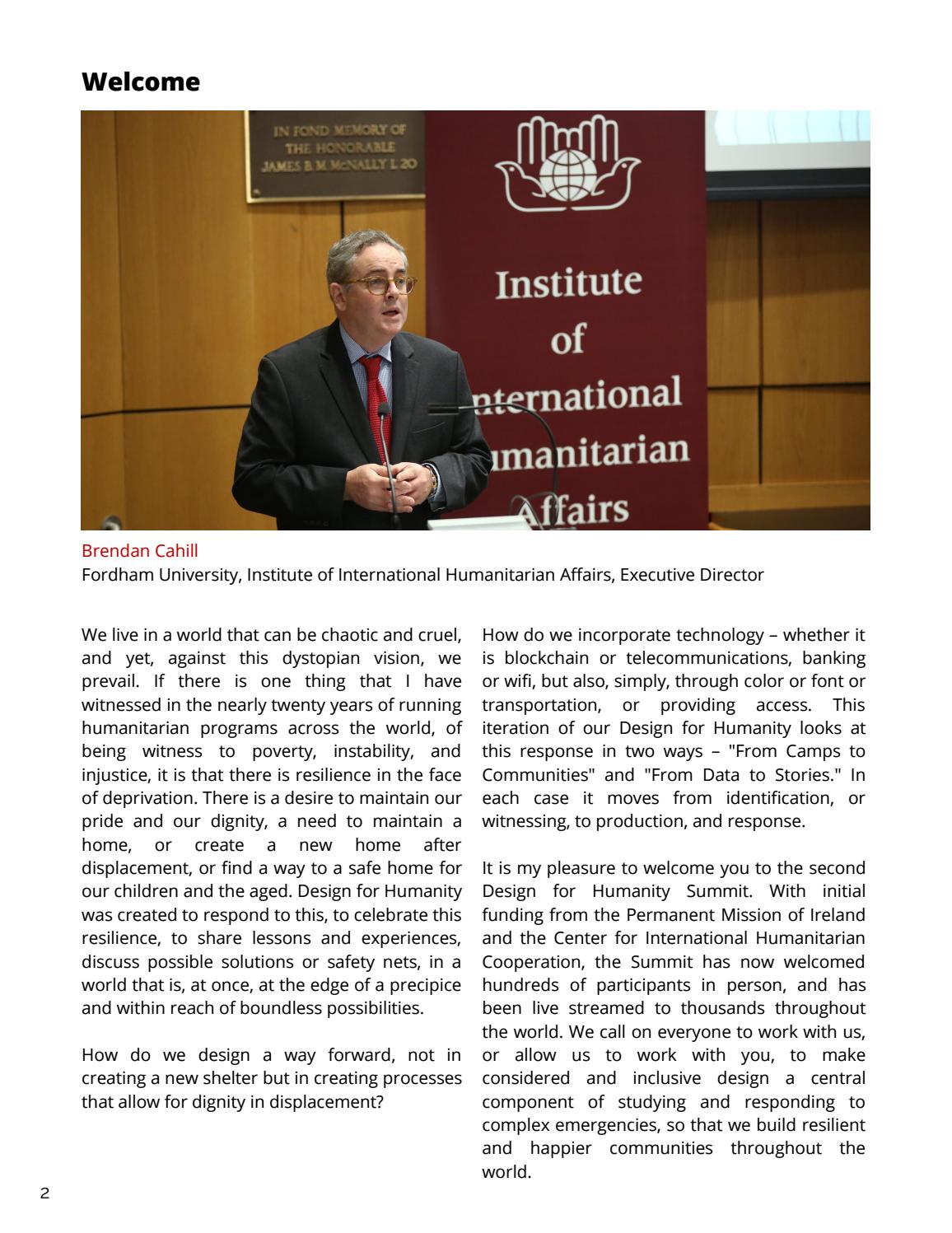
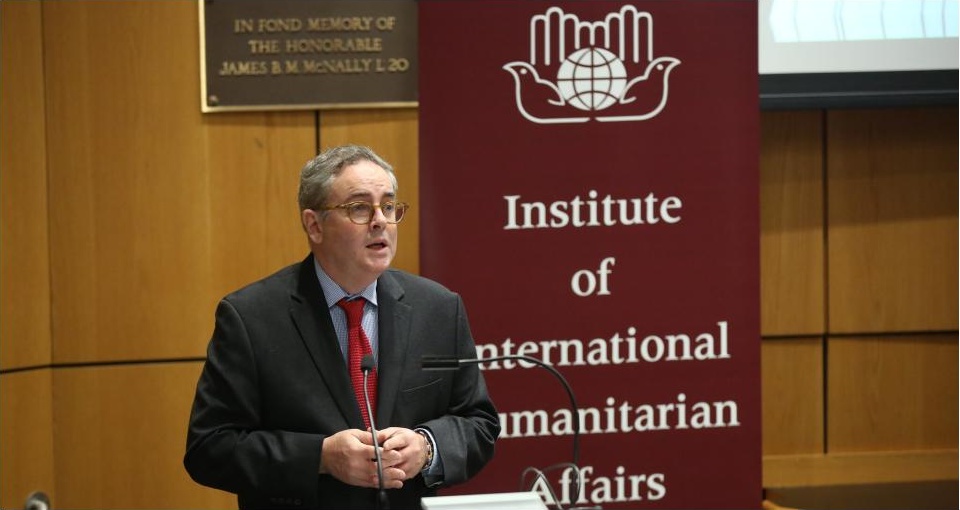
Fordham University, Institute of International Humanitarian Affairs, Executive Director
We live in a world that can be chaotic and cruel, and yet, against this dystopian vision, we prevail. If there is one thing that I have witnessed in the nearly twenty years of running humanitarian programs across the world, of being witness to poverty, instability, and injustice, it is that there is resilience in the face of deprivation. There is a desire to maintain our pride and our dignity, a need to maintain a home, or create a new home after displacement, or find a way to a safe home for our children and the aged. Design for Humanity was created to respond to this, to celebrate this resilience, to share lessons and experiences, discuss possible solutions or safety nets, in a world that is, at once, at the edge of a precipice and within reach of boundless possibilities.
How do we design a way forward, not in creating a new shelter but in creating processes that allow for dignity in displacement?
How do we incorporate technology - whether it is blockchain or telecommunications, banking or wifi, but also, simply, through color or font or transportation, or providing access. This iteration of our Design for Humanity looks at this response in two ways - "From Camps to Communities" and "From Data to Stories." In each case it moves from identification, or witnessing, to production, and response.
It is my pleasure to welcome you to the second Design for Humanity Summit. With initial funding from the Permanent Mission of Ireland and the Center for International Humanitarian Cooperation, the Summit has now welcomed hundreds of participants in person, and has been live streamed to thousands throughout the world. We call on everyone to work with us, or allow us to work with you, to make considered and inclusive design a central component of studying and responding to complex emergencies, so that we build resilient and happier communities throughout the world.
Source & original pages
Transcribed for the web and checked against the original yearbook pages. Line wrapping and page layout have been adapted for screen reading; the authors’ wording is retained. Roles, references and descriptions are those of the original publication.
View the original page layouts