2019 / workshop
Understanding Migration and Refugee Situations in the Age of Big Data
Data Visualization and Design Specialist, UN Global Pulse, Executive Office of the Secretary-General, United Nations
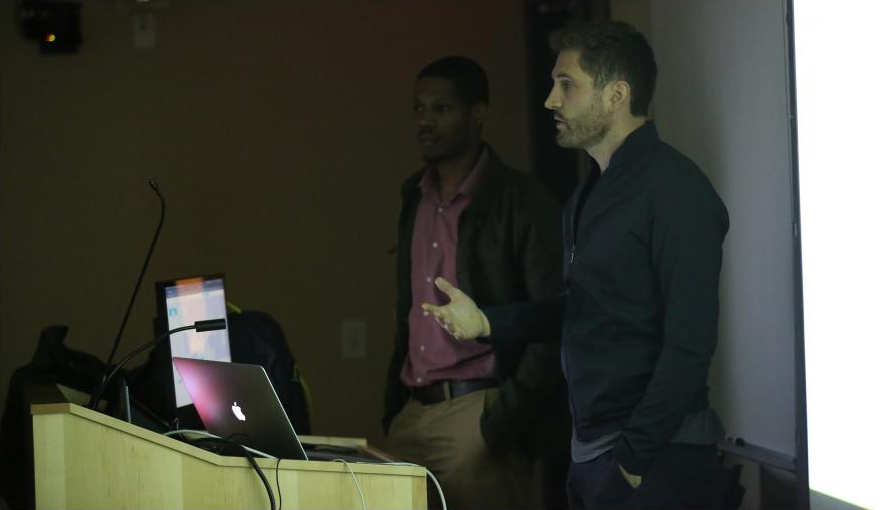
UN Global Pulse is an initiative of the United Nations Secretary-General on big data and AI. Its network of innovation labs in New York, Uganda, and Indonesia enables UN System partners to discover and mainstream applications of big data and real-time analytics for sustainable development, humanitarian action, and peace. Global Pulse's advocacy agenda focuses on public-private data philanthropy partnerships, and data privacy and policy innovation to enable the responsible and ethical use of new technologies and new data sources for the public good. The workshop proposed for the Design for Humanity Summit II aims to foster a discussion around the value of big, unstructured data for understanding human migration and refugee conditions. This data has great, often untapped value for telling the stories of the plight of persons of concern, which can help activists advocate for the rights of these people; and for improving the timeliness and effectiveness of humanitarian responses to crises.
However, this poses many questions: What new sources of unstructured data can be useful for understanding the situation of persons of concern? Can this data be used to anticipate humanitarian crises? How can they be fed into operations? Can they make response planning more dynamic? What will it take to integrate them into existing workflows? What are the ways in which unstructured data might be misused?
UN Global Pulse has conducted several case studies to explore answers to these questions in collaboration with the UNHCR Innovation Service since 2015. The first, entitled "Along the Way" and conducted in 2015-16, investigates how social media can provide useful information to humanitarian organizations, as migrants make their way into Europe. The second, entitled "Rescue Signatures in the Mediterranean" and conducted in 2016-17, explores how vessel tracking data can shed new light on maritime migration crises. The third, entitled "Towards Understanding Refugee Integration in Turkey Using Call Detail Records" and conducted in 2018, explores how patterns in cell-phone activity can help improve the understanding of refugee integration in a receiving society.
Global Pulse is also studying the potential of more experimental data sources and technologies. These include public radio talk shows, which are mined to listen to the voices of people in areas where internet connectivity is low, or where communities do not have sufficient means to access the Internet; satellite imagery, in which the detection of features is automated for facilitating the study of migrant and refugee settlements; and automatic speech generation around the situation of persons of concern to provoke humanitarian actors to think about the implications of artificial intelligence on the perception of migrants and refugees by host communities.
Source & original pages
Transcribed for the web and checked against the original yearbook pages. Line wrapping and page layout have been adapted for screen reading; the authors’ wording is retained. Roles, references and descriptions are those of the original publication.
View the original page layouts