2019 / workshop
Mapping Urban Futures: Lessons from Havana, Cuba
Design Director, FBM Architecture and Assistant Professor, Dalhousie University
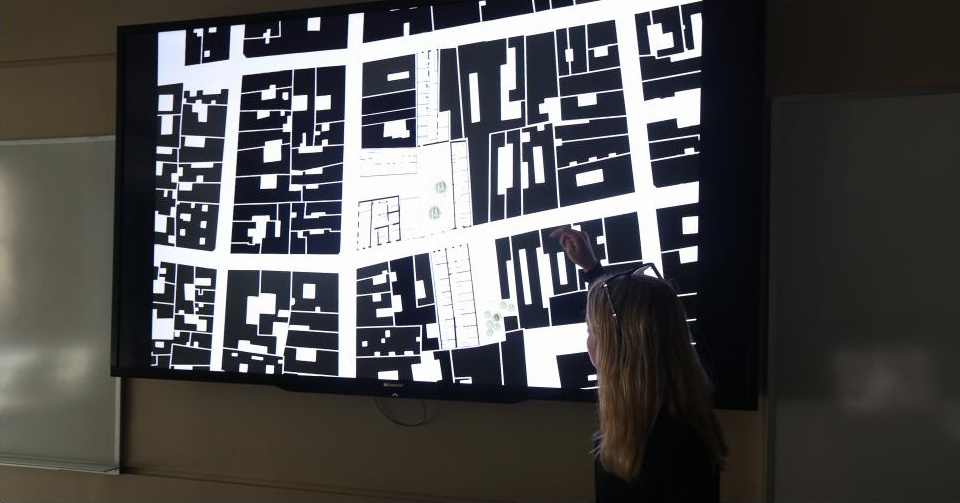
Sites of urban food production in Havana, Cuba, are an adaptable and available land resource for supporting food sovereignty and access to green medicine. Originally generated by the crisis of the Special Period, they are increasingly part of everyday urban complexity involving the social, spatial, economic, and temporal. Hard to describe when viewed from above, it is important to get close to these sites to understand how they are made and re-made and whether there are lessons within them for this transitioning city.
Henri Lefebvre made the powerful supposition that cultures dynamically produce space over time, which, in turn, shapes society. He started to develop rhythmanalysis as a tool to understand this relationship providing a useful method to study this assertion at sites of urban complexity. Rhythmanalysis captures every day, heterogeneous, and evolving urban narratives of a city, making it an important orientation to participate in and interrogate these sites to challenge how they could help (re)imagine a transitioning Havana.
This workshop studies how social, economic, ecological, and spatial rhythms are entwined over time to create the oeuvre of everyday urban life surrounding these sites. It focuses on beats particular to city life in Havana: the quotidian, the seasonal, the slow decay of infrastructure, the sudden collapse of buildings, and the resourcefulness of everyday invention within the prevailing milieu of scarcity and documents the ways in which the urban every day is continually changing and important to this evolving city.
These sites of urban agriculture are part of Havana's habitus. Mapping of these spaces within the city and the subsequent findings tease out possibilities for constructing urban futures. Beyond the visual, this temporal method understands that the city is sensorial and performative and that these attributes play a significant role in the quality of urban space and life. While clearly a study of site-specificity in Havana, Cuba surrounding sites of urban agriculture, this workshop proposes an alternative methodological approach for recording and designing the city.
Since the Sixth Communist Party Congress in spring 2011, reforms have been made by the government legalizing house sales and expanding self-employment, incrementally moving Cuba towards a freer market economy. The reinstatement of embassies in Havana and Washington after sixty years of hostilities, the death of Fidel Castro, and the evolving U.S. presidencies impact the everyday rhythms of the city. When capturing this period of transition (2012-2019), rhythmanalysis is used to listen, while drawing and mapping are used to record, as both an analytical and illustrative tool, the evolving socio-spatial practices of these sites. These studies of rhythms, in turn, develop into architectural propositions to intercede in every day, not to change lives but to accomplish a tiny revolutionary transformation in the city.
Source & original pages
Transcribed for the web and checked against the original yearbook pages. Line wrapping and page layout have been adapted for screen reading; the authors’ wording is retained. Roles, references and descriptions are those of the original publication.
View the original page layouts