2019 / article
International Rescue Committee
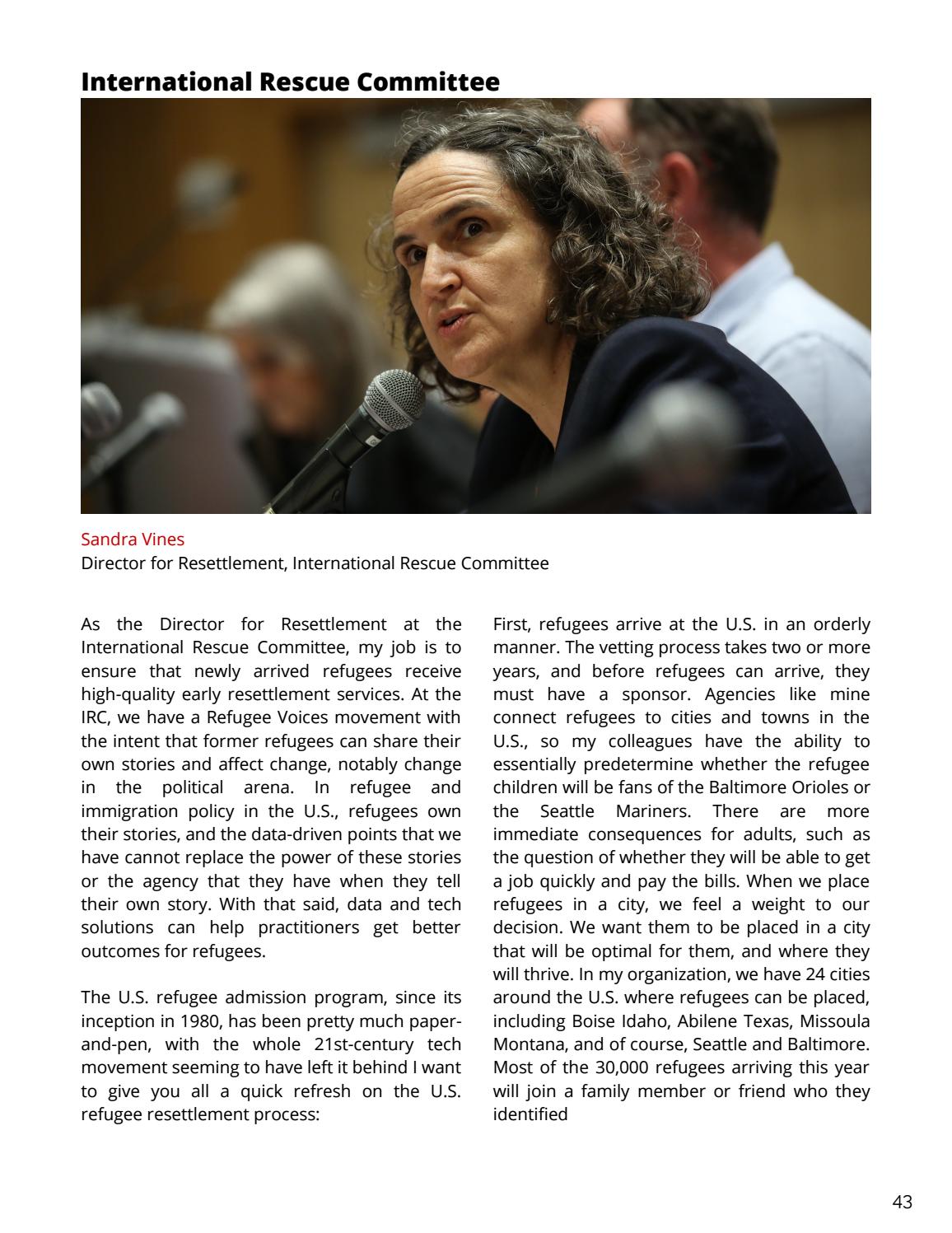
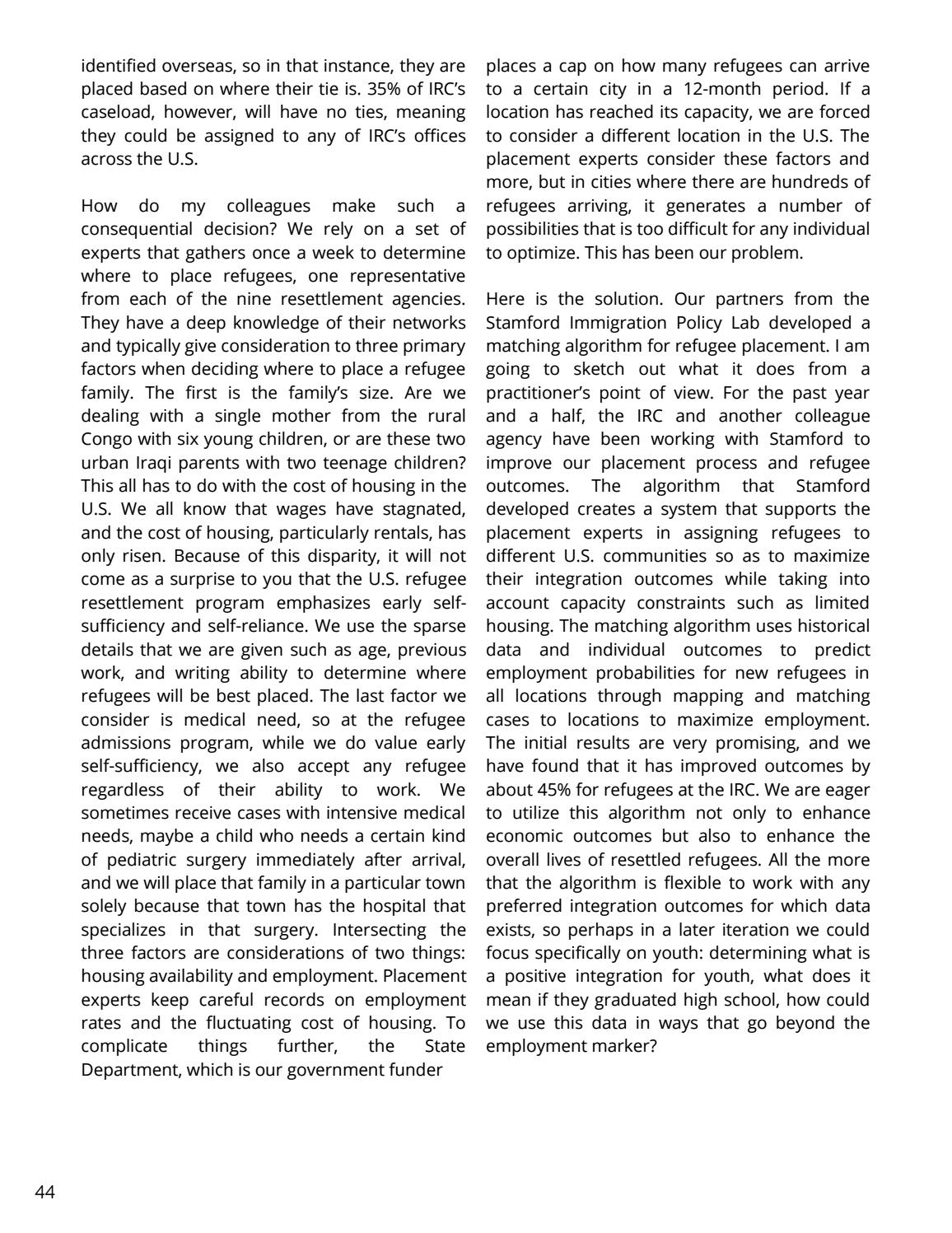
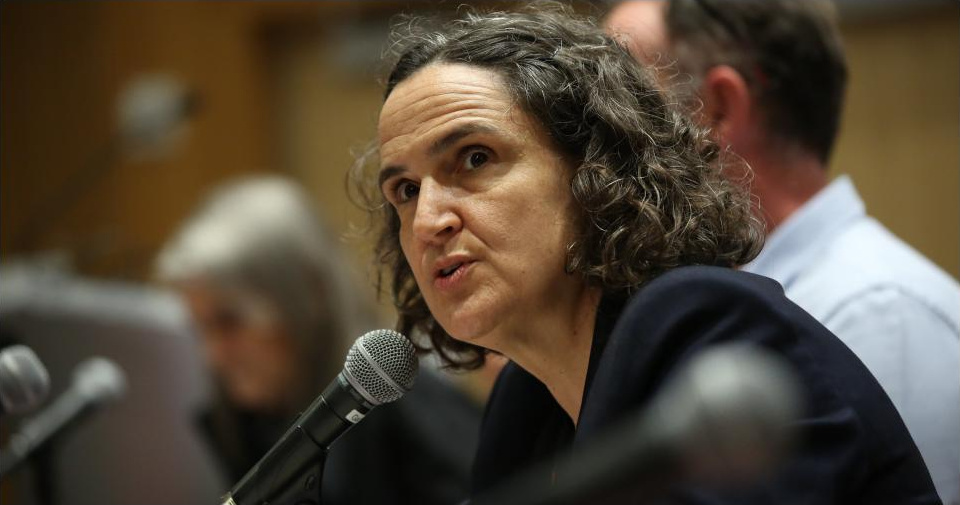
Director for Resettlement, International Rescue Committee
As the Director for Resettlement at the International Rescue Committee, my job is to ensure that newly arrived refugees receive high-quality early resettlement services. At the IRC, we have a Refugee Voices movement with the intent that former refugees can share their own stories and affect change, notably change in the political arena. In refugee and immigration policy in the U.S., refugees own their stories, and the data-driven points that we have cannot replace the power of these stories or the agency that they have when they tell their own story. With that said, data and tech solutions can help practitioners get better outcomes for refugees.
The U.S. refugee admission program, since its inception in 1980, has been pretty much paper-and-pen, with the whole 21st-century tech movement seeming to have left it behind I want to give you all a quick refresh on the U.S. refugee resettlement process:
First, refugees arrive at the U.S. in an orderly manner. The vetting process takes two or more years, and before refugees can arrive, they must have a sponsor. Agencies like mine connect refugees to cities and towns in the U.S., so my colleagues have the ability to essentially predetermine whether the refugee children will be fans of the Baltimore Orioles or the Seattle Mariners. There are more immediate consequences for adults, such as the question of whether they will be able to get a job quickly and pay the bills. When we place refugees in a city, we feel a weight to our decision. We want them to be placed in a city that will be optimal for them, and where they will thrive. In my organization, we have 24 cities around the U.S. where refugees can be placed, including Boise Idaho, Abilene Texas, Missoula Montana, and of course, Seattle and Baltimore. Most of the 30,000 refugees arriving this year will join a family member or friend who they identified identified overseas, so in that instance, they are placed based on where their tie is. 35% of IRC's caseload, however, will have no ties, meaning they could be assigned to any of IRC's offices across the U.S.
How do my colleagues make such a consequential decision? We rely on a set of experts that gathers once a week to determine where to place refugees, one representative from each of the nine resettlement agencies. They have a deep knowledge of their networks and typically give consideration to three primary factors when deciding where to place a refugee family. The first is the family's size. Are we dealing with a single mother from the rural Congo with six young children, or are these two urban Iraqi parents with two teenage children? This all has to do with the cost of housing in the U.S. We all know that wages have stagnated, and the cost of housing, particularly rentals, has only risen. Because of this disparity, it will not come as a surprise to you that the U.S. refugee resettlement program emphasizes early self-sufficiency and self-reliance. We use the sparse details that we are given such as age, previous work, and writing ability to determine where refugees will be best placed. The last factor we consider is medical need, so at the refugee admissions program, while we do value early self-sufficiency, we also accept any refugee regardless of their ability to work. We sometimes receive cases with intensive medical needs, maybe a child who needs a certain kind of pediatric surgery immediately after arrival, and we will place that family in a particular town solely because that town has the hospital that specializes in that surgery. Intersecting the three factors are considerations of two things: housing availability and employment. Placement experts keep careful records on employment rates and the fluctuating cost of housing. To complicate things further, the State Department, which is our government funder places a cap on how many refugees can arrive to a certain city in a 12-month period. If a location has reached its capacity, we are forced to consider a different location in the U.S. The placement experts consider these factors and more, but in cities where there are hundreds of refugees arriving, it generates a number of possibilities that is too difficult for any individual to optimize. This has been our problem.
Here is the solution. Our partners from the Stamford Immigration Policy Lab developed a matching algorithm for refugee placement. I am going to sketch out what it does from a practitioner's point of view. For the past year and a half, the IRC and another colleague agency have been working with Stamford to improve our placement process and refugee outcomes. The algorithm that Stamford developed creates a system that supports the placement experts in assigning refugees to different U.S. communities so as to maximize their integration outcomes while taking into account capacity constraints such as limited housing. The matching algorithm uses historical data and individual outcomes to predict employment probabilities for new refugees in all locations through mapping and matching cases to locations to maximize employment. The initial results are very promising, and we have found that it has improved outcomes by about 45% for refugees at the IRC. We are eager to utilize this algorithm not only to enhance economic outcomes but also to enhance the overall lives of resettled refugees. All the more that the algorithm is flexible to work with any preferred integration outcomes for which data exists, so perhaps in a later iteration we could focus specifically on youth: determining what is a positive integration for youth, what does it mean if they graduated high school, how could we use this data in ways that go beyond the employment marker?
Source & original pages
Transcribed for the web and checked against the original yearbook pages. Line wrapping and page layout have been adapted for screen reading; the authors’ wording is retained. Roles, references and descriptions are those of the original publication.
- The word “identified” is repeated across the printed page 43–44 transition. The printed text says “Stamford Immigration Policy Lab” and repeats “Stamford”; this transcription retains that source wording.
View the original page layouts