2019 / workshop
Inclusive Cities: Urban Planning Strategies for Sustainable Solutions
Urban Planner and Researcher (programme, page 15)
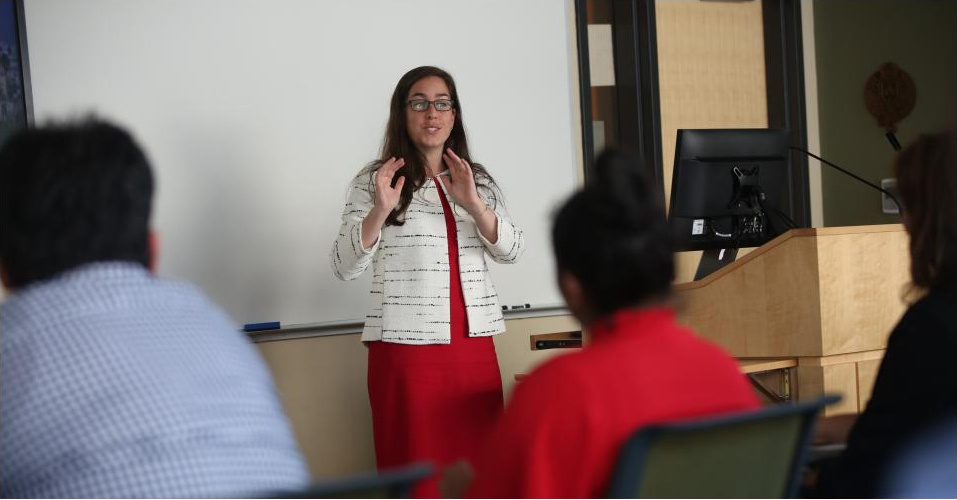
In a time of hostile rhetoric and fiscal austerity, local governments are demonstrating unparalleled leadership in inclusive city planning for refugees and immigrants. According to the United Nations High Commissioner for Refugees’ 2018 Global Trends in Forced Displacement, 61% of refugees and 80% of internally displaced persons live in urban areas. As displacement becomes increasingly urban and protracted, city planning is an effective tool to promote sustainable solutions. It will be crucial for humanitarian organizations and the private sector to acknowledge the role of cities and to develop effective partnerships for sustainable responses.
As traditional humanitarian response models were not designed for service delivery in an urban context, humanitarian organizations, the private sector, and cities must cooperate and consider how to align programs to ensure that humanitarian programs simultaneously advance broader development goals. Urban planning provides an opportunity to bridge the historically segmented phases of humanitarian and development aid. Nearly every city government has an existing development plan, which includes land use, economic development, transportation, and capital projects, among others. These existing goals do not change when a challenge arises, be that a natural disaster, or the rapid arrival of a refugee population; in fact, they become even more important. It is a critical moment for humanitarian organizations, the private sector, and cities to align interests, identify synergies, and deliver stronger services to displaced and local populations alike.
For example, Hamburg, Germany, used a new land-use planning law to enable the rapid construction of asylum seeker housing, while contributing permanently to the city’s overall social housing stock. São Paulo, Brazil, has granted all immigrants, including refugees and asylum seekers, access to social rights, all public services, and local political participation. The cities of Athens, Greece, and Kampala, Uganda, have both organized city-wide coordination forums to manage collaboration between the city, humanitarian organizations, and the private sector.
As cities continue to plan and deliver services for all residents, displaced and local communities alike, humanitarian organizations and the private sector should look to local governments as a partner in program design and implementation to ensure effective and sustainable strategies.
Source & original pages
Transcribed for the web and checked against the original yearbook pages. Line wrapping and page layout have been adapted for screen reading; the authors’ wording is retained. Roles, references and descriptions are those of the original publication.
- The printed byline spells the name “Jessica Sayde Wolff”; the programme uses “Jessica Sadye Wolff”. The article prints an MIT role apparently duplicated from the preceding article. That role is retained in sourceAuthorAffiliations; the displayed affiliation “Urban Planner and Researcher” is from the programme on page 15.
View the original page layouts