2019 / address
Humanitarian Keynote Address: Design is One
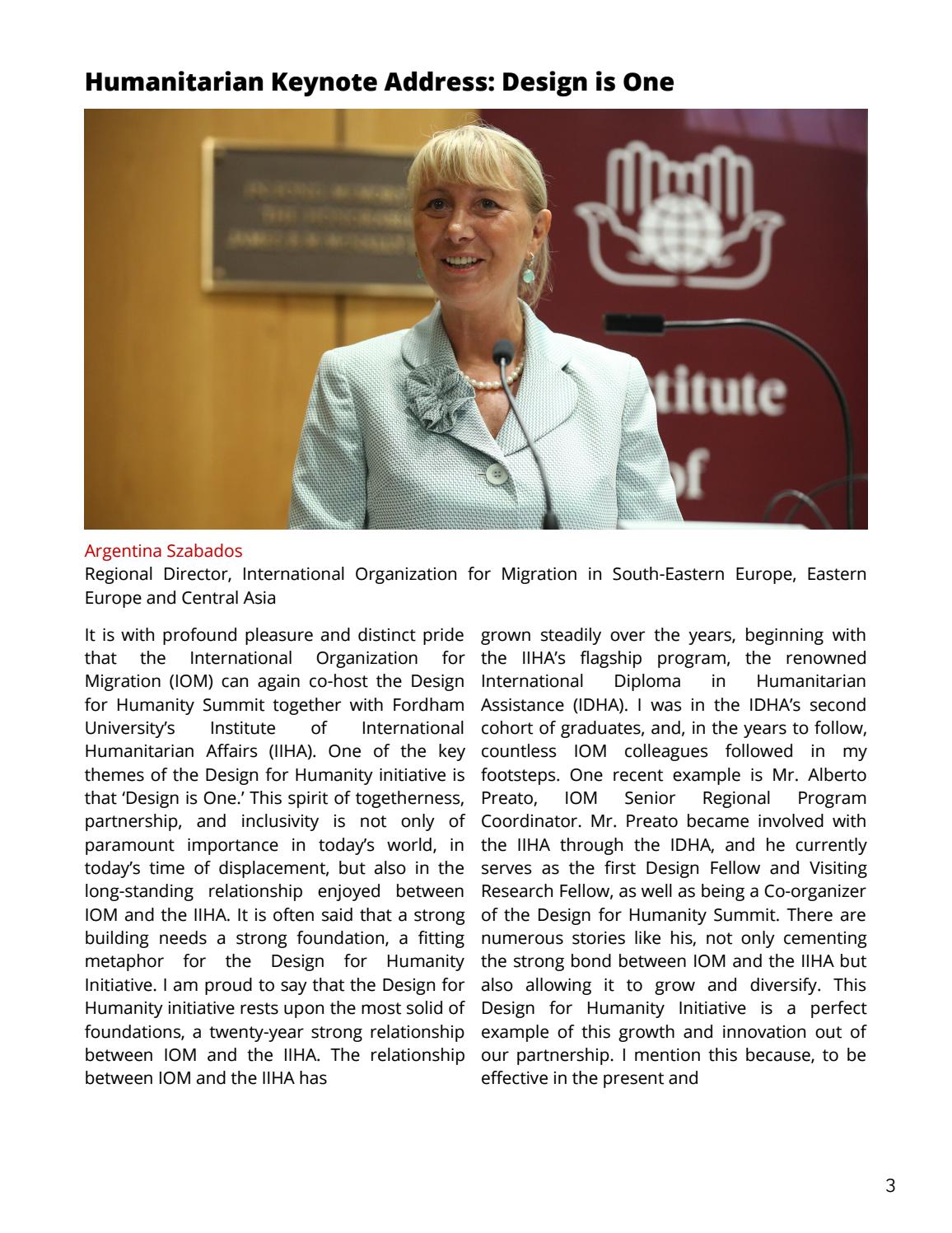
Regional Director, International Organization for Migration in South-Eastern Europe, Eastern Europe and Central Asia
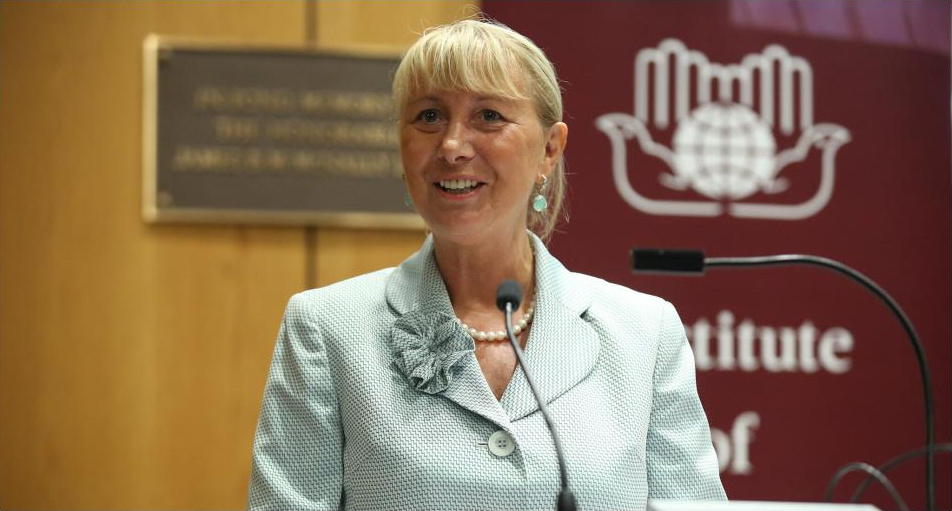
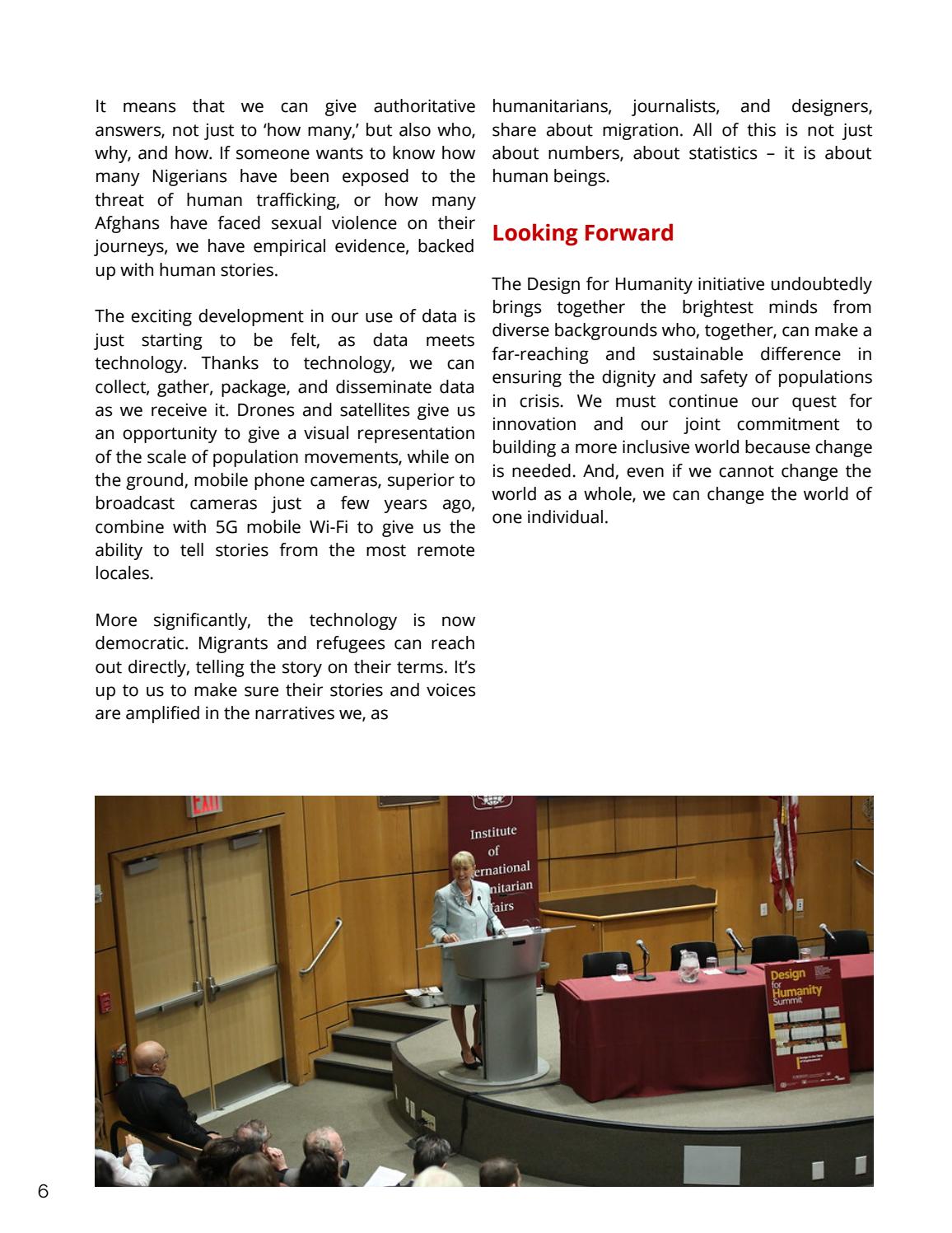
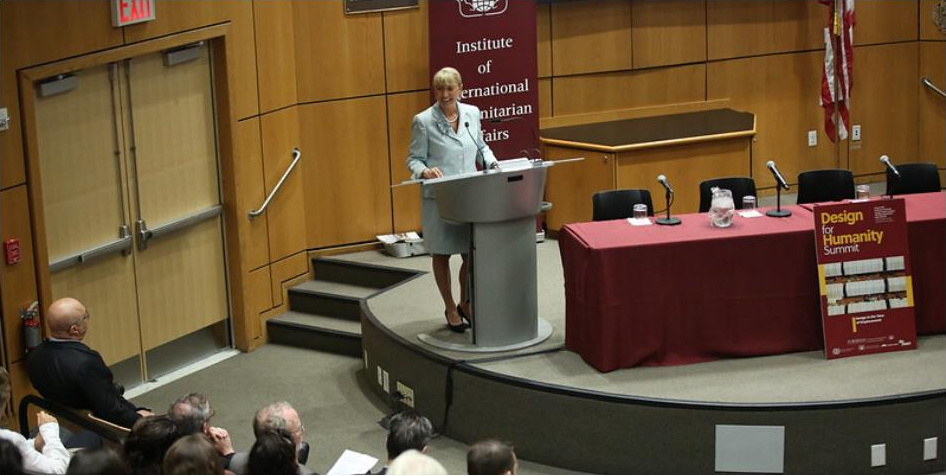
It is with profound pleasure and distinct pride that the International Organization for Migration (IOM) can again co-host the Design for Humanity Summit together with Fordham University's Institute of International Humanitarian Affairs (IIHA). One of the key themes of the Design for Humanity initiative is that ‘Design is One.’ This spirit of togetherness, partnership, and inclusivity is not only of paramount importance in today’s world, in today’s time of displacement, but also in the long-standing relationship enjoyed between IOM and the IIHA. It is often said that a strong building needs a strong foundation, a fitting metaphor for the Design for Humanity Initiative. I am proud to say that the Design for Humanity initiative rests upon the most solid of foundations, a twenty-year strong relationship between IOM and the IIHA. The relationship between IOM and the IIHA has grown steadily over the years, beginning with the IIHA's flagship program, the renowned International Diploma in Humanitarian Assistance (IDHA). I was in the IDHA’s second cohort of graduates, and, in the years to follow, countless IOM colleagues followed in my footsteps. One recent example is Mr. Alberto Preato, IOM Senior Regional Program Coordinator. Mr. Preato became involved with the IIHA through the IDHA, and he currently serves as the first Design Fellow and Visiting Research Fellow, as well as being a Co-organizer of the Design for Humanity Summit. There are numerous stories like his, not only cementing the strong bond between IOM and the IIHA but also allowing it to grow and diversify. This Design for Humanity Initiative is a perfect example of this growth and innovation out of our partnership. I mention this because, to be effective in the present and plan for the future, we must acknowledge the past and understand where we came from. This recognition is especially true in the case of migration and displacement, in the unprecedented movement of people facing our world today. Brendan Cahill, Executive Director of the IIHA, whose keen humanitarian instinct and unparalleled vision have allowed IOM and the IIHA to be the strong partners they are today, understands this. Innovative solutions are built upon common values and inclusive partnerships. We cannot work towards innovative solutions in isolation. Academia must work with the United Nations, and civil society must engage in dialogue with the private sector, tech experts, scientists, designers, researchers, and so on. We all have ideas, but ideas are not solutions. Solutions will arise with vision, humility, and dialogue. This is what the Design for Humanity Initiative, a product of such partnership, is all about - continuous learning, open and transparent dialogue, experience sharing, and knowledge exchange - because we need change.
Humanitarian Timeline: “Are We Doing Better?”
As humanitarian practitioners, we must always challenge and question ourselves. Again, we must look to the past, using our knowledge and experience to grow and innovate. Do the vulnerable, the conflict-affected, and the trafficking victims of 2019 feel better served than those of 1989, or than those of 1951, the year of IOM’s founding?
The challenge, but also the opportunity facing us today, is unprecedented. We have the tools at our disposal that we could only have dreamed of during humanitarian crises of decades past - from Biafra and Cambodia in the 1960s and 1970s, to Ethiopia in the 1980s and to Somalia, Chechnya, Rwanda, and Yugoslavia in the 1990s. Then, through to more recent crises in Haiti, the Philippines, Nepal, Ukraine, and Syria, with protracted and recurrent situations in Iraq, Afghanistan, and the dangerous and life-draining migration movements across the Mediterranean, the Rio Grande, the Sahara, and the Andaman Sea. It is important to delineate such a humanitarian timeline because the question we must repeatedly ask ourselves as we move through humanitarian history is: “Are We Doing Better?” Even if the answer is “yes, dramatically better,” we cannot be satisfied until we ensure we are leaving no one behind. No one.
One of the key ways to answer this question is by looking at the numbers, the raw data. Using figures from UNHCR and UN-Habitat, one in seven people lives in a slum or refugee camp, and more than three billion people - nearly half the world's population - do not have access to clean water or adequate sanitation. While we are making strides in lifting people out of ‘normal’ poverty, the numbers of people living in extreme poverty due to wars and disasters are rising at an alarming rate. Wars, disasters, and the fragility of living in megacities are all drivers for this.
This is where the design of ‘temporarily inhabited spaces’ can make the difference between home or hell.
‘Temporarily Occupied Space’: A Home
I am certain that in every language spoken by all of you in the room today, there is a phrase that approximates the English expression: ‘No place like home.’ Home is something existential for all of us. In our mind's eye, we see the kitchen table where meals and stories were shared, we smile in remembering where the children would play, hearing their shouts of laughter, and we remember exactly where the wooden floorboards creaked.
Home is also a community. It is the everyday language we speak - the people we see on our streets, the services we buy, the church, temple, or mosque. It is a massive part of our identity. To lose this community, this language and this identity to war, drought, flood, climate change, landslide or earthquake, is one of the most profound shocks a human can experience.
There are many innovative and high-tech solutions to displacement, but, oftentimes, solutions are right in front of us - simple, sustainable, environmental, and based on local knowledge. The challenge for IOM and our partners is to provide services to traumatized families and communities in a dignified way, to give them protection, hope, and, of course, a secure feeling of home.
One of the most-quoted sayings in humanitarian action is “there's nothing more permanent than a temporary settlement.” We know that tents become huts, huts become shacks, and, in time, shacks become houses. People often think that the camps in Palestine are the world's oldest. But, in fact, Cooper's Camp in West Bengal has been housing Hindus from what is now Bangladesh since 1947. Seventy-two years.
What can we do when the preferred option, for both host and displaced communities, is to pack the camps up and go home, when going home is not an option? Life goes on; babies are born, children need education, families need work. Life cannot be put on hold.
Another factor to the vulnerability of displaced people is that people tend to run only as far as ‘the next safe place.’ This is why the small country of Lebanon has seen its population grow by twenty-five percent with the influx of people fleeing the war in Syria. Many refugees do not want to be, or cannot make their way, too far from home. And, of course, no one wants to discard the dream of one day returning home.
Data: Not Just Numbers
Lastly, I wish to draw attention to what may be the biggest opportunity we have to do well: using data. While no one can eat data or live under it, data provides us with a new set of rules based on reality, not guesswork. No fake news.
We live in the age of data. We can no longer have a one-sided relationship with those we serve. They have the means to communicate with us - and with each other - directly. It also means that we can no longer develop our services on a hunch. We now have evidence that backs up what we do, and we can be instantly responsive as new data comes in. Data makes us accountable.
In recent years, IOM has been pioneering our Displacement Tracking Matrix (DTM), which was originally intended to allow us to take the pulse of a situation of displacement by running interviews with large numbers of people on the move. It allowed us to be more reflexive and responsive and to learn from communities. Over time, it has developed to give us a vast repository of data, which allows us to speak with authority across a huge range of humanitarian issues and to do it, quoting the voice of the masses, as well as the individual and all the subgroups in between.
It means that we can give authoritative answers, not just to ‘how many,’ but also who, why, and how. If someone wants to know how many Nigerians have been exposed to the threat of human trafficking, or how many Afghans have faced sexual violence on their journeys, we have empirical evidence, backed up with human stories.
The exciting development in our use of data is just starting to be felt, as data meets technology. Thanks to technology, we can collect, gather, package, and disseminate data as we receive it. Drones and satellites give us an opportunity to give a visual representation of the scale of population movements, while on the ground, mobile phone cameras, superior to broadcast cameras just a few years ago, combine with 5G mobile Wi-Fi to give us the ability to tell stories from the most remote locales.
More significantly, the technology is now democratic. Migrants and refugees can reach out directly, telling the story on their terms. It's up to us to make sure their stories and voices are amplified in the narratives we, as humanitarians, journalists, and designers, share about migration. All of this is not just about numbers, about statistics - it is about human beings.
Looking Forward
The Design for Humanity initiative undoubtedly brings together the brightest minds from diverse backgrounds who, together, can make a far-reaching and sustainable difference in ensuring the dignity and safety of populations in crisis. We must continue our quest for innovation and our joint commitment to building a more inclusive world because change is needed. And, even if we cannot change the world as a whole, we can change the world of one individual.
Source & original pages
Transcribed for the web and checked against the original yearbook pages. Line wrapping and page layout have been adapted for screen reading; the authors’ wording is retained. Roles, references and descriptions are those of the original publication.
View the original page layouts