2019 / workshop
Humanitarian Innovation: What We Learned Running Community-Centered Social Innovation Labs in Bangladesh, Jordan, Kenya, and the Philippines
Learning Manager at DEPP Innovation Labs
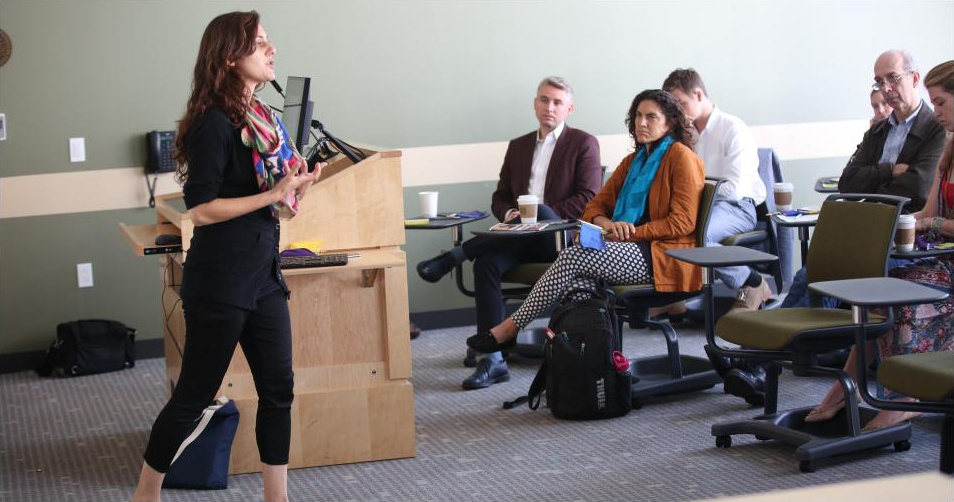
The humanitarian sector has offered communities affected by crisis limited space to lead in the diagnosis of problems and the design of solutions in relief efforts globally. This approach risks that support programs will be subject to the biases and assumptions often associated with external intervention, and will not reflect the needs and priorities of crisis-affected people. The Disasters and Emergencies Preparedness (DEPP) Innovation Programme - a two-year programme funded by UK Aid - focused on creating inclusive, resourced spaces and networks to enable disaster-affected communities to identify and develop innovative solutions to the disasters or conflicts that disrupt their lives.
Through innovation labs in Bangladesh, Jordan, Kenya and Philippines, the program supported a diverse group of innovators to research, explore, build, test, and pilot new solutions to recurrent local problems. We learned three key lessons about how to best support local ingenuity for humanitarian problem-solving.
Create an enabling environment. While innovation is everywhere, formal innovation methodology is not. To be truly accessible to an underserved group of brilliant changemakers with limited exposure to trainings on design and innovation, the program had to develop new tools and approaches to make the concepts accessible beyond Western, literate, English-speaking groups. Next, local innovators need time and space in their lives where they can work on something that will not pay the rent. This required scholarships and grants to enable participation from all socio-economic levels.
Finally, some support emerged as more important than anticipated - like support to practice innovation mindsets, interpret user feedback, conduct research, manage teamwork and cope with the emotional ups and downs of the journey.
Integrate design tools and mindsets with humanitarian protection principles. Human-centered design (HCD) proved to be an important methodology to support local designers to develop relevant solutions. The results clearly demonstrated that affected communities frame and prioritize their problems differently than the humanitarian sector, and they design solutions that leverage local resources, knowledge, and networks to deliver impact. However, for HCD to work well in a humanitarian context, some additional considerations should be made. Some of these include managing how testing prototypes builds expectations in the community, who holds the accountability for those expectations when the designer is from the same community, how post-conflict dynamics are considered when bringing a representative group together, and what support innovators receive to manage the stress of a fast-paced design process.
Be creative about pathways to scale. Using a design method for new humanitarian solutions will only help you create a validated prototype. From there, many programs are designed to support an entrepreneurship model, where innovators are expected to form start-ups. However, this is not a realistic path for all innovators, who face unique barriers if they come from a resource constrained environment, or if they are refugees in the country where they are designing solutions. As humanitarian sector implementers, we needed to do more to find pathways for the solutions into the sector, and access to networks to test, pilot, and implement the community-designed solutions.
Source & original pages
Transcribed for the web and checked against the original yearbook pages. Line wrapping and page layout have been adapted for screen reading; the authors’ wording is retained. Roles, references and descriptions are those of the original publication.
View the original page layouts