2019 / workshop
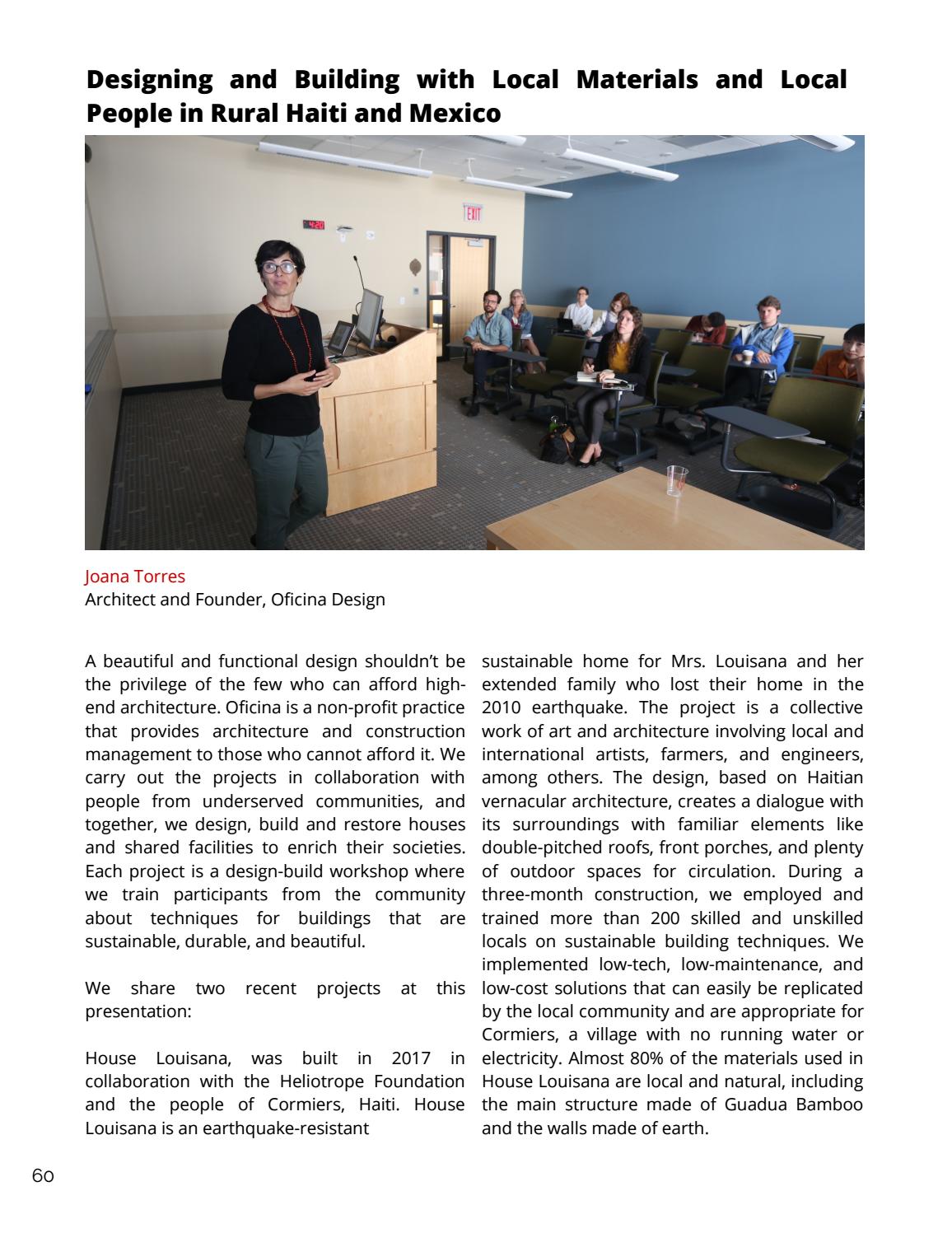
Designing and Building with Local Materials and Local People in Rural Haiti and Mexico
Architect and Founder, Oficina Design
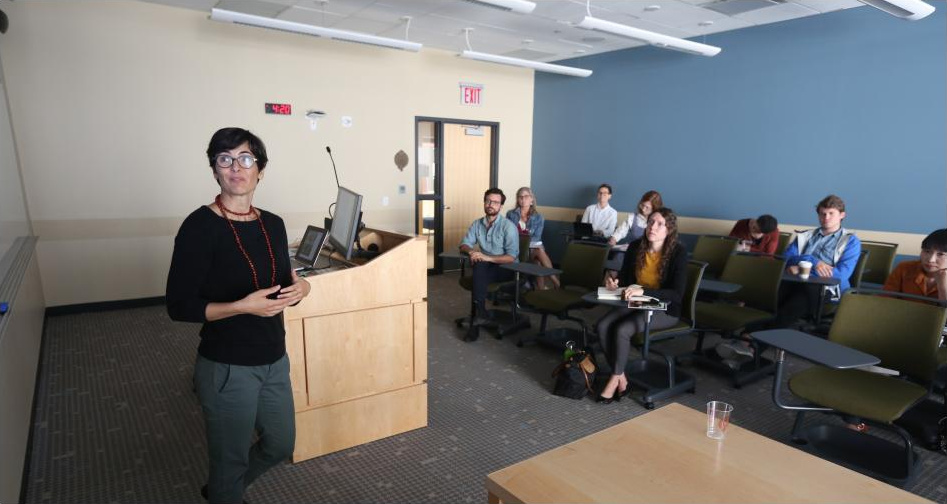
A beautiful and functional design shouldn't be the privilege of the few who can afford high-end architecture. Oficina is a non-profit practice that provides architecture and construction management to those who cannot afford it. We carry out the projects in collaboration with people from underserved communities, and together, we design, build and restore houses and shared facilities to enrich their societies. Each project is a design-build workshop where we train participants from the community about techniques for buildings that are sustainable, durable, and beautiful.
We share two recent projects at this presentation:
House Louisana, was built in 2017 in collaboration with the Heliotrope Foundation and the people of Cormiers, Haiti. House Louisana is an earthquake-resistant sustainable home for Mrs. Louisana and her extended family who lost their home in the 2010 earthquake. The project is a collective work of art and architecture involving local and international artists, farmers, and engineers, among others. The design, based on Haitian vernacular architecture, creates a dialogue with its surroundings with familiar elements like double-pitched roofs, front porches, and plenty of outdoor spaces for circulation. During a three-month construction, we employed and trained more than 200 skilled and unskilled locals on sustainable building techniques. We implemented low-tech, low-maintenance, and low-cost solutions that can easily be replicated by the local community and are appropriate for Cormiers, a village with no running water or electricity. Almost 80% of the materials used in House Louisana are local and natural, including the main structure made of Guadua Bamboo and the walls made of earth.
House Louisana also played an important role in stimulating the local economy through the creation of fair-paid labor and the purchase of local materials and services.
In 2018 we created ZumaPoop in Oaxaca, Mexico, we designed and built children-centric dry toilets and hand-washing units for La Casita —a women-led, free daycare for children of families with little or no income. The daycare is located in Moctezuma, an informal community that lacks water and sewage in the suburbs of Oaxaca.
We used well-established local construction techniques, including wattle-and-daub walls, and we used materials produced by local artisans such as roof and wall tiles and ceramic restroom appliances. These materials and techniques are not only the most affordable, but they integrate well with the local environment and enable others within the same community to follow the same design for their own dry toilets. ZumaPoop is a participatory project to, for, and by the community. Educators, parents, volunteers, and the children actively participated in the design phase with charrettes and workshops and volunteered throughout the construction.
Presently, children and educators proudly work on the maintenance of the space and composting process. ZumaPoop dry-toilets benefit directly more than 30 people, both children and adults, who frequent La Casita every day, many of which have no restroom at home.
Source & original pages
Transcribed for the web and checked against the original yearbook pages. Line wrapping and page layout have been adapted for screen reading; the authors’ wording is retained. Roles, references and descriptions are those of the original publication.
View the original page layouts