2019 / editorial
Design for Humanity 2019: Design in the Time of Displacement Introduction
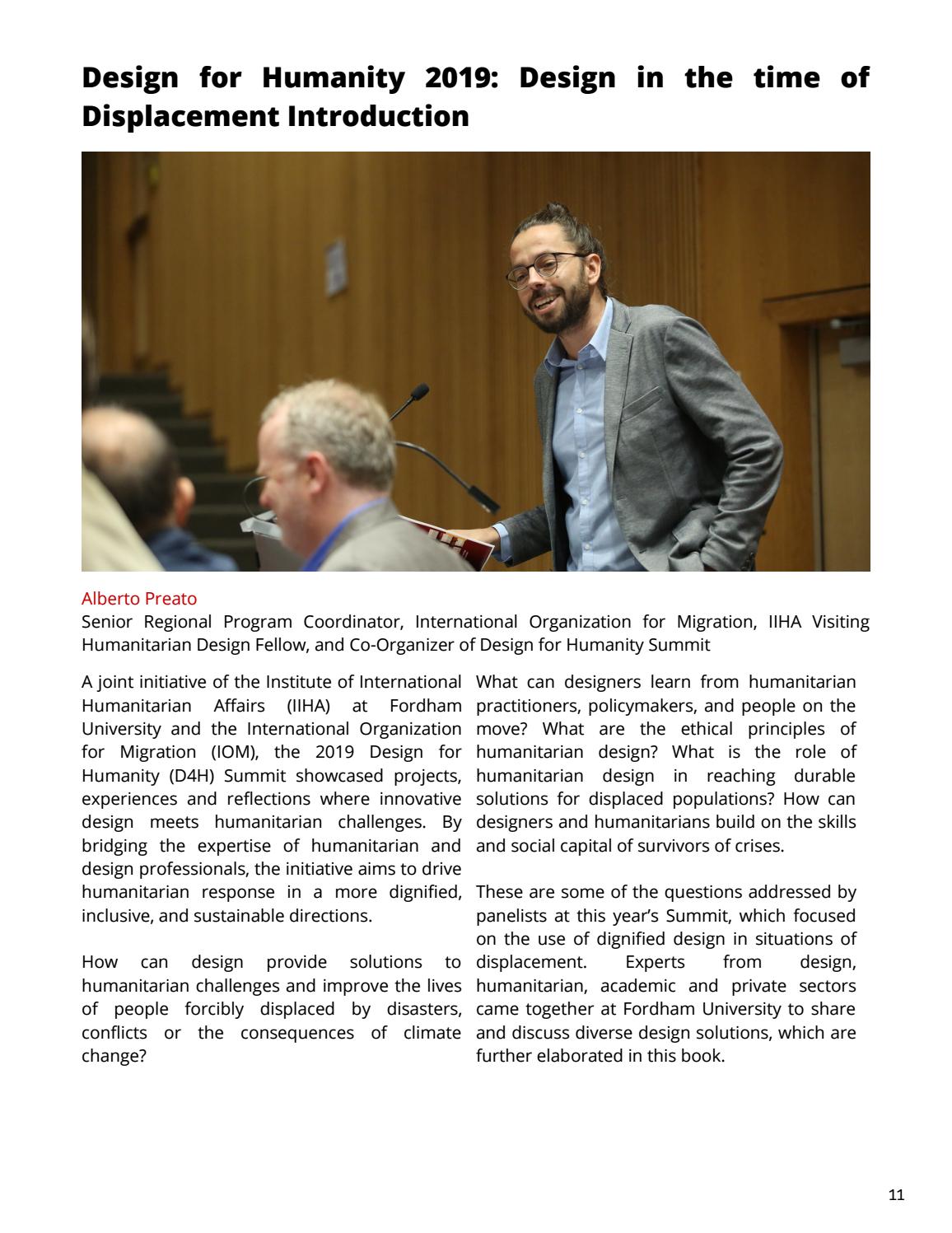
Senior Regional Program Coordinator, International Organization for Migration, IIHA Visiting Humanitarian Design Fellow, and Co-Organizer of Design for Humanity Summit
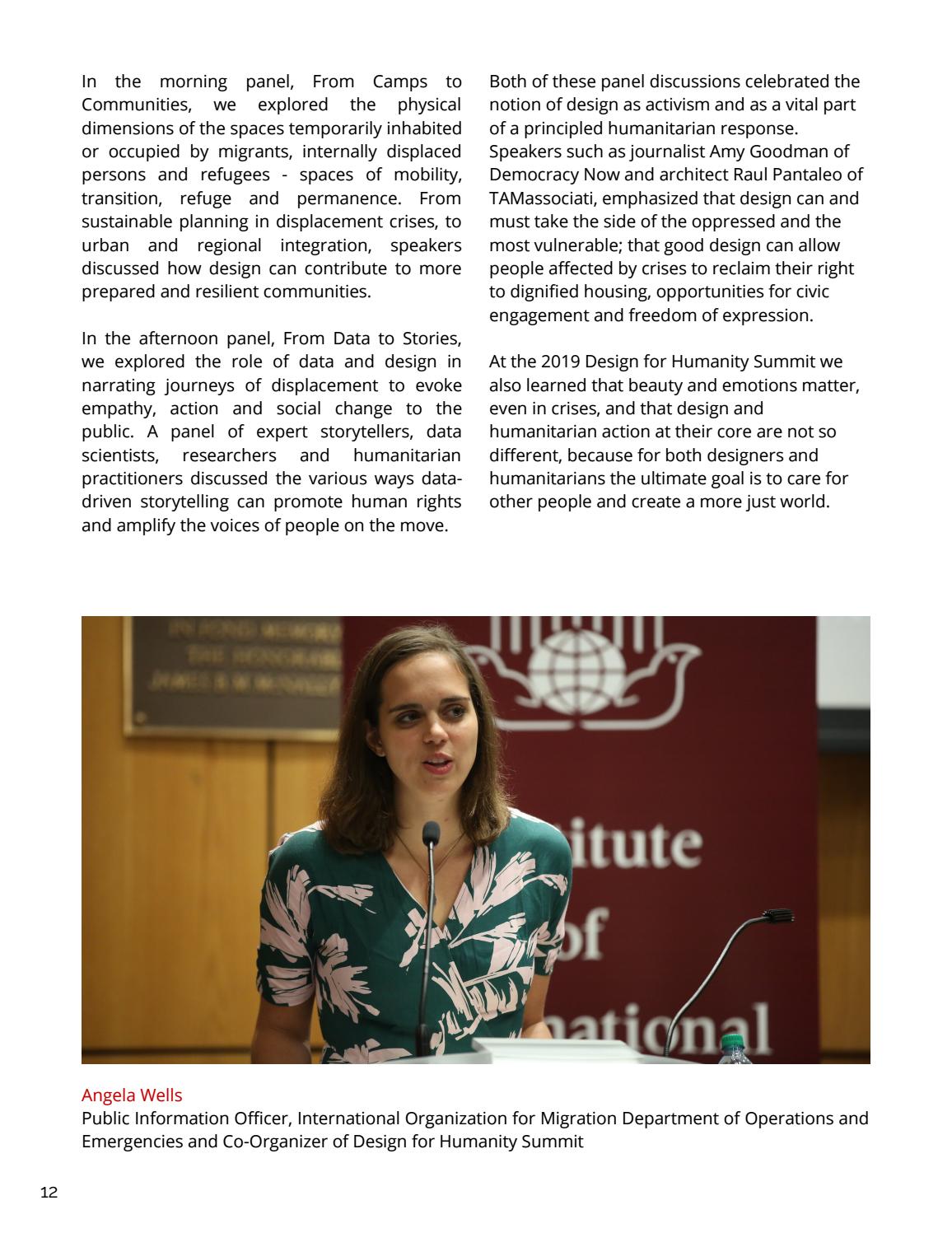
Angela Wells — Public Information Officer, International Organization for Migration Department of Operations and Emergencies and Co-Organizer of Design for Humanity Summit
A joint initiative of the Institute of International Humanitarian Affairs (IIHA) at Fordham University and the International Organization for Migration (IOM), the 2019 Design for Humanity (D4H) Summit showcased projects, experiences and reflections where innovative design meets humanitarian challenges. By bridging the expertise of humanitarian and design professionals, the initiative aims to drive humanitarian response in a more dignified, inclusive, and sustainable directions.
How can design provide solutions to humanitarian challenges and improve the lives of people forcibly displaced by disasters, conflicts or the consequences of climate change?
What can designers learn from humanitarian practitioners, policymakers, and people on the move? What are the ethical principles of humanitarian design? What is the role of humanitarian design in reaching durable solutions for displaced populations? How can designers and humanitarians build on the skills and social capital of survivors of crises.
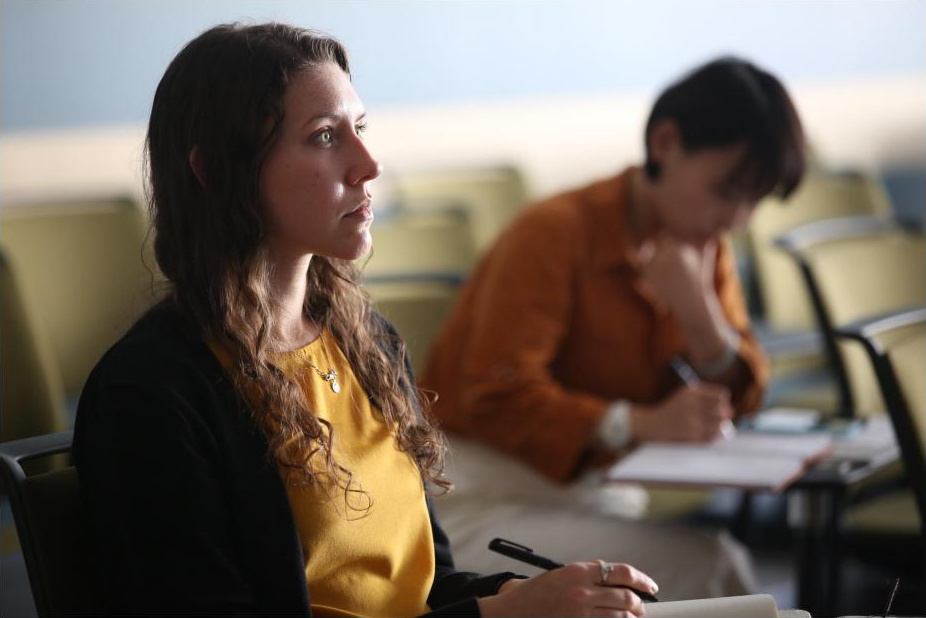
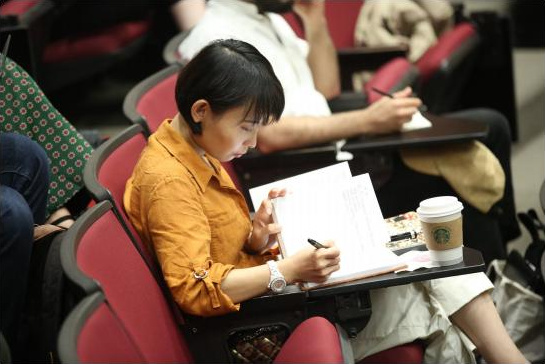
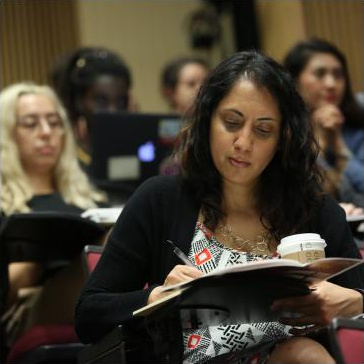
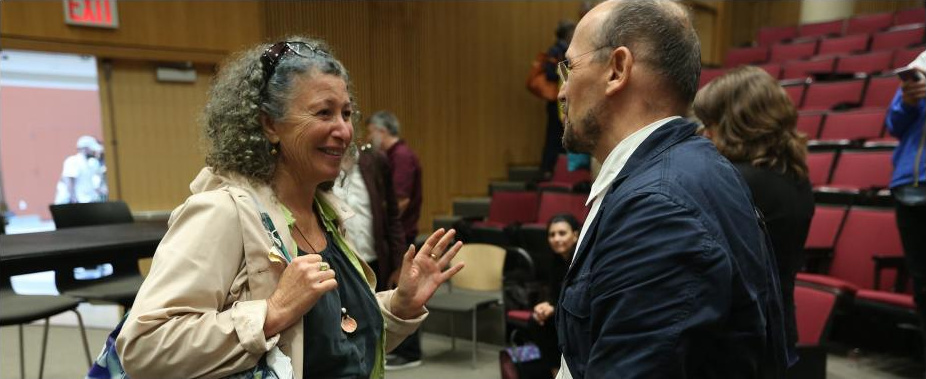
These are some of the questions addressed by panelists at this year's Summit, which focused on the use of dignified design in situations of displacement. Experts from design, humanitarian, academic and private sectors came together at Fordham University to share and discuss diverse design solutions, which are further elaborated in this book.
In the morning panel, From Camps to Communities, we explored the physical dimensions of the spaces temporarily inhabited or occupied by migrants, internally displaced persons and refugees - spaces of mobility, transition, refuge and permanence. From sustainable planning in displacement crises, to urban and regional integration, speakers discussed how design can contribute to more prepared and resilient communities.
In the afternoon panel, From Data to Stories, we explored the role of data and design in narrating journeys of displacement to evoke empathy, action and social change to the public. A panel of expert storytellers, data scientists, researchers and humanitarian practitioners discussed the various ways data-driven storytelling can promote human rights and amplify the voices of people on the move.
Both of these panel discussions celebrated the notion of design as activism and as a vital part of a principled humanitarian response. Speakers such as journalist Amy Goodman of Democracy Now and architect Raul Pantaleo of TAMassociati, emphasized that design can and must take the side of the oppressed and the most vulnerable; that good design can allow people affected by crises to reclaim their right to dignified housing, opportunities for civic engagement and freedom of expression.
At the 2019 Design for Humanity Summit we also learned that beauty and emotions matter, even in crises, and that design and humanitarian action at their core are not so different, because for both designers and humanitarians the ultimate goal is to care for other people and create a more just world.
Design for Humanity Summit 2019
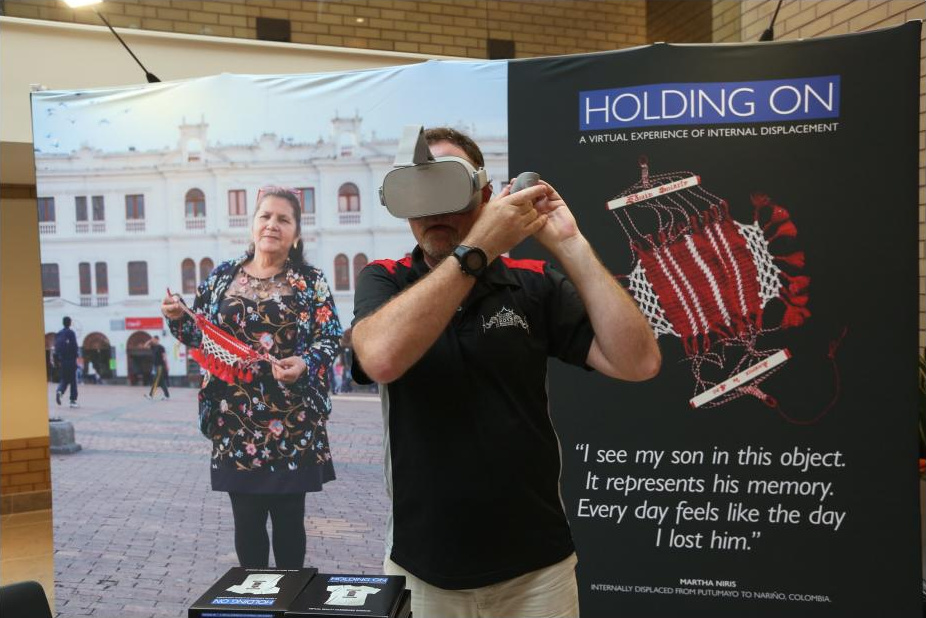
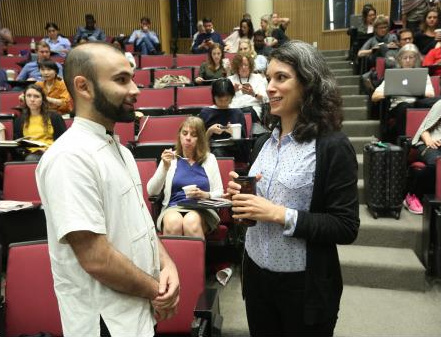
On June 21, 2019 the Institute of International Humanitarian Affairs and the International Organization for Migration, hosted the Design for Humanity Summit 2019 at Fordham University’s Lincoln Center Campus in New York City. Presenters from design, humanitarian, and private sectors explored the intersection of design and humanitarian action for dignified crisis response.
The Design for Humanity Summit 2019 was made possible with support of the Center for International Humanitarian Cooperation. Community partners included Dezeen and IDEO.org.
Design for Humanity Summit 2019: Panel Discussion and Speeches
Welcome
Brendan Cahill — Executive Director, Institute of International Humanitarian Affairs
Humanitarian Keynote Address
Argentina Szabados — Regional Director, IOM in South-Eastern Europe, Eastern Europe, and Central Asia
Design Keynote Address
Richard Blewitt — Head of Delegation and Permanent Observer, Delegation of the International Federation of Red Cross and Red Crescent Societies to the United Nations
Design Dialogue 1: From Camps to Communities
How Design Can Contribute to More Prepared and Resilient Communities in Displacement Settings
Moderator: Brian Kelly — IOM Head of Community Stabilization Unit
Speakers:
Raul Pantaleo — Co-Founder, Studio TAMassociati
Johan Karlsson — Managing Director, Better Shelter
Jan-Maurits Loecke — Architect, Writer, Urban Activist, Co-Founder, He.Lo Architects
Lorin Kavanaugh-Ulku — Senior Advisor, Open Innovation Competitions, U.S. Global Development Lab, USAID
Storytelling Keynote Address
Amy Goodman — Host and Executive Producer of Democracy Now!
Design Dialogue 2: From Data to Stories
How Data-Driven Storytelling Can Promote Human Rights and Amplify Voices of People on the Move
Moderator: Amy Goodman — Host and Executive Producer of Democracy Now!
Speakers:
Erika Wei — Senior Data Visualization Developer, UN OCHA’s Centre for Humanitarian Data
Duncan Lawrence — Executive Director, Immigration Policy Lab, Stanford University
Sandra Vines — Director for Resettlement, International Rescue Committee
Jocelyn Kelly — Founding Director, Harvard Humanitarian Initiative (HHI) Women in War Program
Paul Dillon — Managing Editor, IOM’s Media and Communications Division
Design for Humanity Summit 2019: Workshops
Understanding Migration and Refugee Situations in the Age of Big Data
Jeremy Boy — Data Visualization and Design Specialist, UN Global Pulse, Executive Office of the Secretary-General, United Nations
Rapid Play Planning: Playground Design with Refugee Communities
Charles Newman — Designer, Builder, and Researcher, Unfrastructure Design, LLC
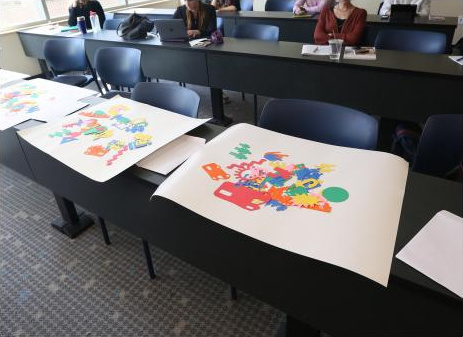
Mapping Home and Hope: Using Mapping Tools to Better Understand the Place Experiences of Displaced Refugee Families
Bree Akesson — Associate Professor, Wilfrid Laurier University’s Faculty of Social Work
Kearney Coupland — Ph.D. Candidate in the Geography Department, Wilfrid Laurier University
Understanding Migration and Refugee Situations in the Age of Big Data
Jeremy Boy — Data Visualization and Design Specialist, UN Global Pulse, Executive Office of the Secretary-General, United Nations
Humanitarian Innovation: What We Learned Running Community-Centered Social Innovation Labs in Bangladesh, Jordan, Kenya, and the Philippines
Lillie Rosen — Learning Manager, DEPP Innovation Labs
Designing and Building with Local Materials and Local People in Rural Haiti and Mexico
Joana Torres — Architect and Founder, Oficina Design
Food and Memory
Ayesha Mukadam — Visual Artist
No Lost Generation: A Case and Field Study of Education as a Core Human Right for Refugee Children, from the Holocaust to the Syrian Civil War
Mary Stylidi — Regional Commissioner for Unaccompanied Child Refugees in Greece and Syria, UNHCR
Simulating Crisis Response: Using Agent-Based Modeling to Visualize the Spread of Ebola and the Impact of Response Interventions Used in the Democratic Republic of the Congo
Michael de St. Aubin — Project Coordinator, KoBoToolbox, Harvard Humanitarian Initiative
Saira Khan — Data Analyst, Signal Program on Human Security and Technology, Harvard Humanitarian Initiative
Code of Ethics? Share Your Critical Reflections on Art and Design in the Humanitarian Context!
Azra Akšamija — Director, MIT Future Heritage Lab (FHL) and Associate Professor, MIT Art, Culture and Technology Program
Inclusive Cities: Urban Planning Strategies for Sustainable Solutions
Jessica Sadye Wolff — Urban Planner and Researcher
Mapping Urban Futures: Lessons from Havana, Cuba
Susan Fitzgerald — Design Director, FBM Architecture and Assistant Professor, Dalhousie University
Design Pedagogy for Social Justice, Integrating Principles of Theory U for Impact
Susan Melsop — Associate Professor of Design, Ohio State University
Source & original pages
Transcribed for the web and checked against the original yearbook pages. Line wrapping and page layout have been adapted for screen reading; the authors’ wording is retained. Roles, references and descriptions are those of the original publication.
- The programme is transcribed as printed, including the repeated Jeremy Boy workshop row on page 15 and variations between programme names/titles and individual article bylines. Programme table columns are rendered as sequential headings and attributed paragraphs.
- Original printed page 11
- Original printed page 12
- Original printed page 13
- Original printed page 14
- Original printed page 15
- Original printed page 16
- Original printed page 17
View the original page layouts