2018 / article
Syria Initiative for Refugee Children
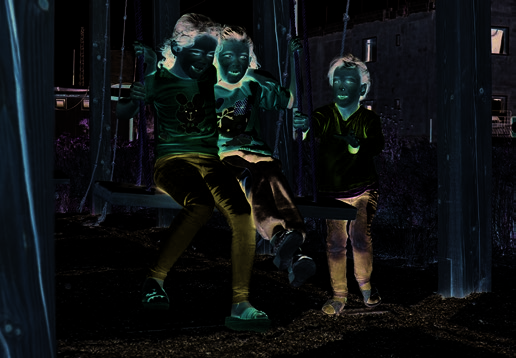
The Syria Initiative for Refugee Children was established in 2016 as a new model of transnational, cross-sectoral collaboration to address the needs of Syria’s most vulnerable refugees: children.
The diaspora caused by the Syrian Civil War has heightened an urgency to develop new tools, processes and methods to support positive interactions, social cohesion and healing at the nexus of humanitarian response and design. In response, an ad-hoc group of Boston designers set out to answer the following questions: 1. Can US-based designers effectively contribute during international humanitarian crises?
2. Would the design of public spaces in refugee settlements address a real need?
3. What would a model for trans-national design/build collaboration look like?
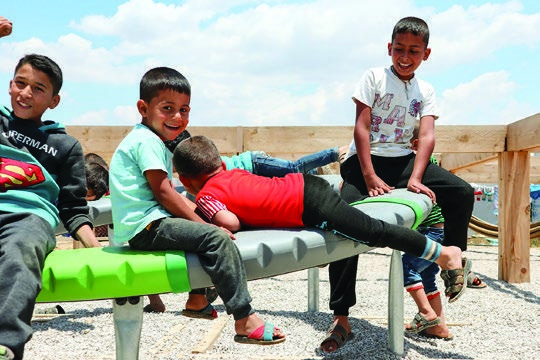
The Syria Initiative is, on the surface, an initiative to build playgrounds. But in actuality, it is a first step to developing an adaptable process that introduces child-focused spaces into refugee contexts. With equal emphasis on social equity and design excellence, this initiative is a framework for local and international design and humanitarian networks to work together in impacted parts of the world.
It provides an accessible and adaptable road map for designers who want to apply their skills to issues of global importance.
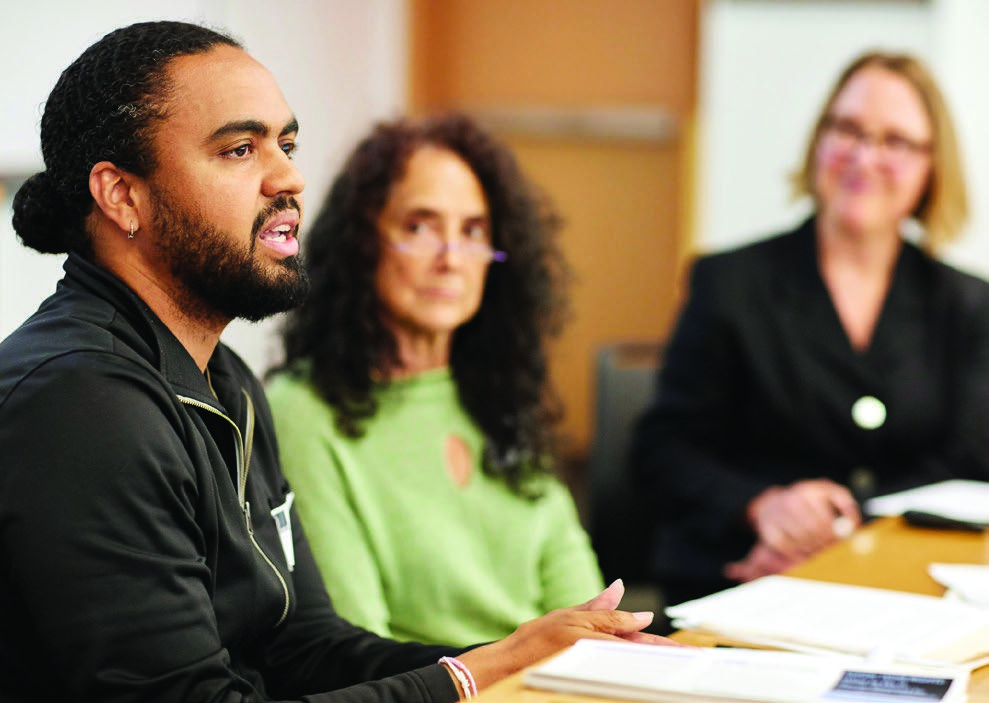
What began as a collaboration between members of the Boston Society of Architects and Boston Society of Landscape Architects, became a two-year process involving international NGOs, international architects and craftspeople, US-based design faculty and students, multiple institutes, firms, and companies, and over 75 members of the Boston design community.
Since completing the first playground in summer 2018, the collaborative DNA has adapted to support a second projects in Lebanon as well as one in the United States.
The entire process included: 1. Partnering with an international network of designers, builders, NGO’s, fiscal agents, funders, architects, academics.
2. Fundraising to support spaces for social interactions through play.
3. Facilitating a collaborative design process.
4. Implementing with local partners to support design, management, and construction capacities.
5. Documenting interviews, site surveys, construction progress, and outcomes.
6. Reflecting on successes and failures, and apply those lessons to the next project.
Source & original pages
Transcribed for the web and checked against the original yearbook pages. Line wrapping and page layout have been adapted for screen reading; the authors’ wording is retained. Roles, references and descriptions are those of the original publication.
- Original phrase “a second projects” is retained.
View the original page layouts