2018 / article
Multilateralism in Support of the Most Vulnerable
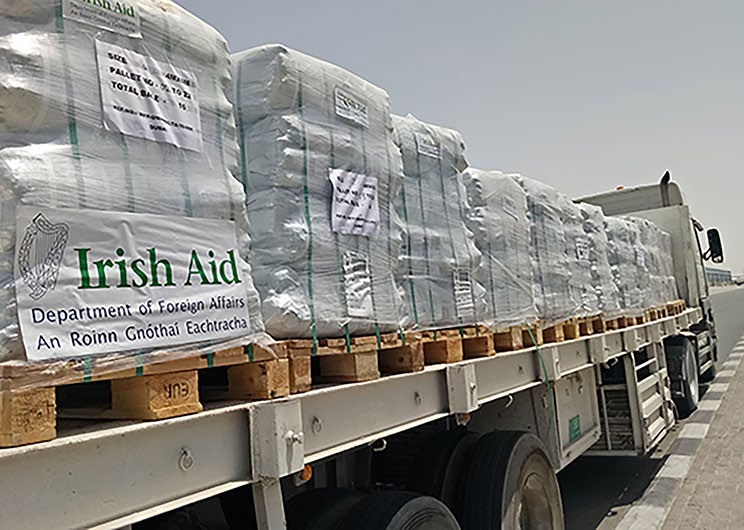
Ireland’s long-standing commitment to the humanitarian principles of humanity, impartiality, neutrality and independence has led to Ireland being one of the major advocates of the European Consensus on Humanitarian Aid, the key document guiding the EU and its Member States’ approach to humanitarian aid. The Consensus seeks to ensure that humanitarian aid is directed to where it is most needed–without discrimination–and not instrumentalized for political or other ends. Central to maximizing Ireland’s response is strong support to and engagement with the multilateral system, including the UN as well as the EU.
The provision of core, un-earmarked funding to UN bodies and to UN-managed funds like the Central Emergency Response Fund and the UN country-based humanitarian funds allows these organisations to prioritise those in greatest need, scaling up aid quickly in response to sudden-onset disasters or spikes in conflict.
Engagement in multilateral fora also allows Ireland to participate in decisions on how to channel effective humanitarian assistance to those in greatest need around the world.
Earlier this year Ireland took over the Chair of the OCHA Donor Support Group, working even more closely with OCHA and other donors to enhance the delivery of humanitarian aid and ensure coherent and effective responses to humanitarian crises.
Ultimately, the solutions to resolving and preventing most humanitarian crises are political. Currently, some 80% of humanitarian crises across the globe are conflict-related.
Ireland therefore not only advocates for the timely provision of humanitarian assistance where it is needed most; we also advocate at EU and UN levels for the resolution of crises and for full accountability where there have been breaches of international humanitarian law. This joined-up response, which is rooted in multilateralism, allows us to achieve a much greater impact for humanitarian aid while also seeking to protect the most vulnerable.
Source & original pages
Transcribed for the web and checked against the original yearbook pages. Line wrapping and page layout have been adapted for screen reading; the authors’ wording is retained. Roles, references and descriptions are those of the original publication.
View the original page layouts