2018 / editorial
Introduction
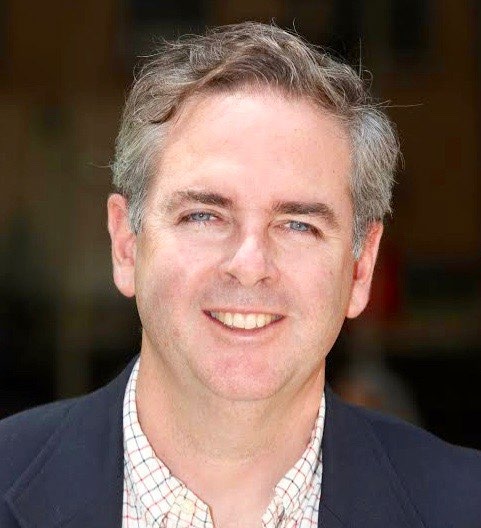
Brendan Cahill — Fordham University, Institute of International Humanitarian Affairs, Executive Director
It is with great pleasure and pride that we inaugurate the first Design for Humanity initiative. It has taken time, good fortune, and, perhaps most importantly, the right people to bring us to this point.
The philosophy of Massimo Vignelli was Design is One, and that philosophy, and the living influence of Massimo and Lella Vignelli in particular, was an inspiration to putting this research program together. In everything the Vignellis did, and designed, there was a purpose. The center of a project held together, whether it was the structure of a book, a brand, a tea set, a church, or even their own clothes. They drove their design forward in an intellectual, proactive way, through consultation and inspiration, to end with something informed and new.
Years ago I was asked to meet with two young designers who had won a prestigious contest by proposing, and then building, a new refugee structure. It was very well done, and the presentation was persuasive, but no one on the design side had thought to consult their counterparts from the humanitarian sector.
No one from design had thought through transportation issues, water supplies, or security concerns, had incorporated humanitarian policy on housing. The result—unsurprisingly—was that is was unusable.
There is a great need for innovation and better design in the humanitarian sector, from graphics, to architecture, to better delivery systems, and all must be done in an age of little resources and more complex emergencies.
Good design empowers the user, and brings dignity and even joy.
I knew that this was an area that our Institute could help lead on but it needed two things—practical partners and someone to lead on it.
We'd been working with IOM for nearly twenty years, mostly in the training of their staff, when Argentina Szabados, an alumna of our IDHA program and currently the Regional Director for IOM for South-Eastern Europe, Eastern Europe and Central Asia, suggested that the time had come to formalize the relationship between the University and IOM. The agreement centered on training, research, and possible publications.
Alberto Preato, the first Visiting Humanitarian Research Scholar at our Institute, is an architect who works for IOM in Iraq.
Together with Angela Wells, who had been the Institute's Communications Officer before moving to IOM Geneva, they co-curated the first Design for Humanity Summit. Through their hard work the first conference, attracting 350 people from all over the world, converged on Fordham University in June 2018. This Yearbook is a testament to the presentations and conversations that were part of that first Summit.
It is said that failure is an orphan and success has many parents, but in this case the statement is true: we are thankful not only to Mr Preato and Ms Wells, but also the strong financial support of the Permanent Mission of Ireland to the United Nations, and to the Ambassador, H.E. Geraldine Byrne Nason, who welcomed the audience that day.
Mr. Ashraf El Nour, the Director of the IOM Office to the United Nations was a strong supported from the very beginning of the process, and, again, showed this support by agreeing to be a keynote speaker.
The Institute of International Humanitarian Affairs was founded to be a bridge between the academic community and the humanitarian sector, and this research program sits next to two others, on Education in Emergencies, and on Humanitarian Innovation and Blockchain. Working together alongside our training programs, publications, and gallery exhibitions, Design for Humanity will continue to push for the centrality of dignity in humanitarian response, and for flexibility and consistent improvement in the provision of assistance to those who are vulnerable.
Source & original pages
Transcribed for the web and checked against the original yearbook pages. Line wrapping and page layout have been adapted for screen reading; the authors’ wording is retained. Roles, references and descriptions are those of the original publication.
- Original apparent typographical errors ‘that is was’ and ‘a strong supported’ are retained. Portrait has no individual caption or image-specific credit.
View the original page layouts