2018 / interview
Designing the Arc of the Problem
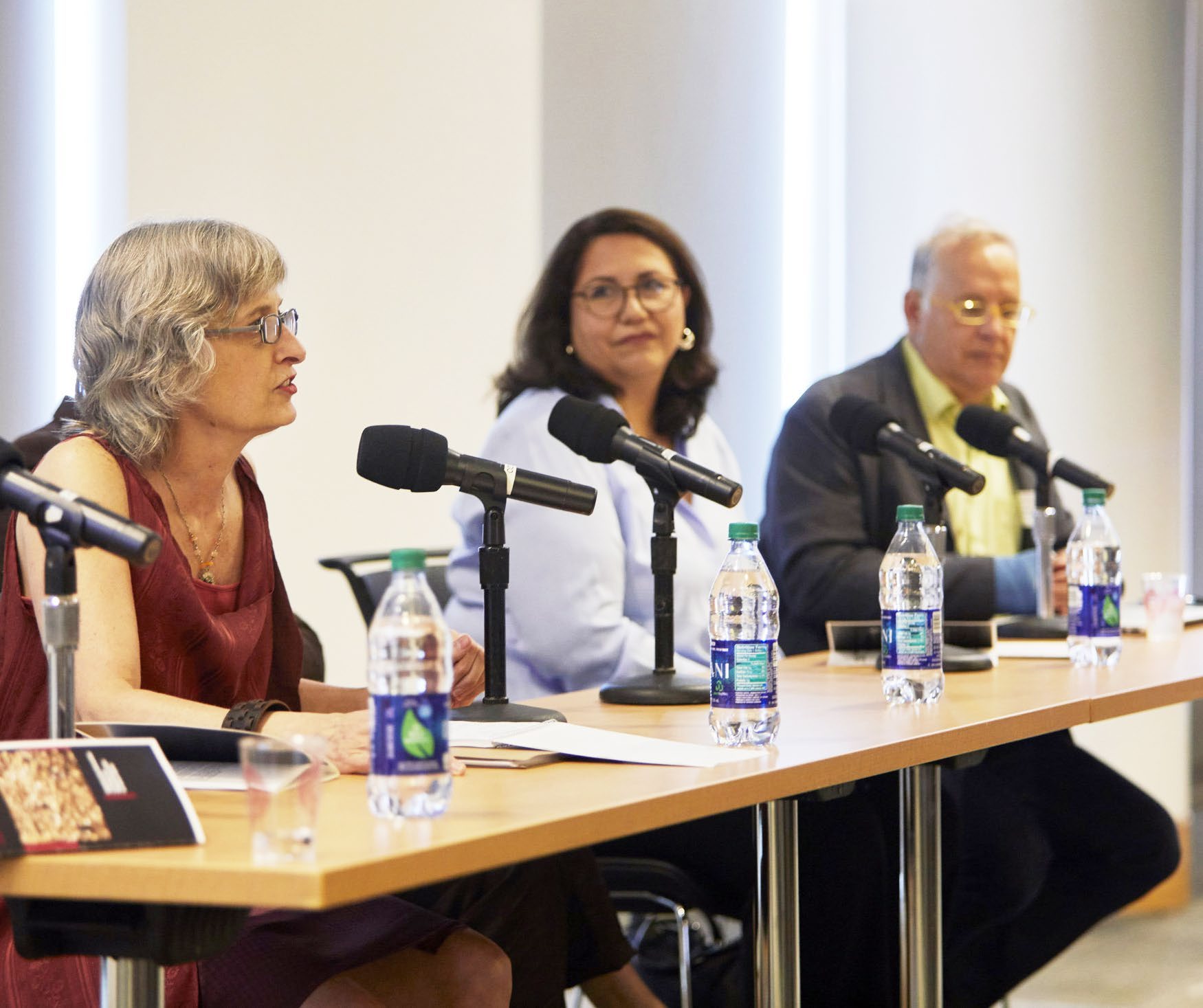
Angela: What is the role of designers and architects in humanitarian interventions?
Marie: Architects play a critical role in social justice because we make decisions about space. We can bring in more light and position homes to circulate and cool the air. We respect people’s culture by learning about how they cook, use their toilets, separate the lives of men and women and gather. We can argue for trees and plants and gardens, as well as prevent floods and infested stagnant water. Designers know to encourage soft breezes and use better materials, like mycelium panels for insulation, which offer greater privacy, more silence and can be recycled into the earth. We study drainage and wind and noise and consider people’s right to shade, to get out of the heat. We help limit the risk of disease and teach people to make simple tools so they can upgrade, maintain and care for their new homes.
We can do all this and we should.
But for designers to work more productively with humanitarian initiatives, we should be everywhere. The wonderful Gallic poet Mark Rowlands once told me, “you know, it’s simple, for people to flourish they need good choices–not just any choice, good choices.”
If architects and designers are to help provide and promote good choices we need to turn up in government and transportation, in the ministries of water and agriculture, in finance, business, and banking. We need to work with the folks in data and the map makers. And, clearly, work in development and risk management. Everywhere.
Designers have a pretty good view of the arc of the problem because our projects take time. We’re obliged to think in terms of a longer temporal scale and see the big picture as well as control the details. We need to weave our skills into the knowledge and priorities of other industries and contexts.
Angela: Is there any room for beauty when designing in or after humanitarian crises?
If so, how can affected communities be involved in determining how those spaces are designed?
Marie: Though culture, history and tradition provide a formal aesthetic vocabulary, beauty’s qualities harbor in the quality of light and air, the colours, textures and patterns people enjoy, their habits and speech, the way they interact with and improvise in public space, and their dependence on or estrangement from nature.
Beauty is not simply a set of aesthetic decisions. It’s not big B Beauty, it’s the small b beauty that emanates from the tissue and equilibrium of people’s lives.
Architects tend to design from the outside, but we really should design from the inside out. So invite people to tell you how they share their time, define intimacy, protect their privacy and work together. Invite them to tell you their stories. Beauty is hiding in their answers.
Angela: Can designing for quality of life help restore dignity after a crisis destroys the fabric of people’s lives?
Angela: If you ask people what they want after a crisis, they want what they had yesterday, they want their lives back. In that terrible moment, they can’t imagine what’s possible or think beyond the emergency.
Loss is all they see.
But design can help people shape their futures with greater autonomy and confidence if we speak with them about designing for the things that matter: the sounds they’ve heard their whole life; the trees they sat in while sharing stories with friends and family; the way they walked to work.
Now, we’re onto something–a design ethic that honors the dignity of people’s daily lives.
This is our job as designers, really, to protect and respect with all our heart the dignity and richness of people’s daily lives.
Angela: What is the philosophy behind your organization Problem Wisdom?
Marie: Years of experience in Haiti after the 2010 earthquake taught me that the immensely talented people in disaster relief and recovery are very good at short-term objectives but struggle to assure longer-term sustainable outcomes. This often leads to unintended waste and missed opportunities.
So my initial objective with Problem Wisdom was to help these professionals curtail the waste.
I wanted to work with them upstream to define and position deliberate, relevant and cogent problems from the start. I found that we can lower people’s risk and increase the impact of individual projects and initiatives by using the problem as an asset and good problem design as the means to get the problem right.
We know that good problems save time, money and resources. So we developed a Better Problems curriculum to optimize your ability to stay focused, build stronger teams and instrumental partnerships, gain momentum, and take advantage of unforeseen opportunities. When you master the craft of problem design, you avoid the pitfalls of hasty solutions and build trust among the community and myriad stakeholders.
The most exciting aspect of our curriculum for humanitarian actors is that it’s designed to forge and expand the terrain of common ground. This is so important in disaster recovery precisely because you’re helping structure future development to serve more people. So I specialize in using our process–’Problem-First Thinking’–to teach interdisciplinary teams to collaborate.
If you can’t collaborate successfully, you can’t hold common ground.
In my experience, good problem design can be a secret weapon in the humanitarian context. It’s an advantage that allows you to respond to dramatic shifts in budget or timeline, identify strategic trade-offs, scale the project correctly, and multiply your results by working with the Res (redo, remake, rework, rethink, refurbish, reimagine, repurpose, reuse, refit, replace, redesign, research, reassure).
Source & original pages
Transcribed for the web and checked against the original yearbook pages. Line wrapping and page layout have been adapted for screen reading; the authors’ wording is retained. Roles, references and descriptions are those of the original publication.
- The answer beginning “If you ask people what they want after a crisis” is attributed to Angela in the original; that speaker label is retained rather than reassigned.
View the original page layouts