2018 / article
Designing for Whom?
Humanitarians in general can, if provoked, be a cynical group of individuals. In fact, after forty years in humanitarian work I classify myself as a cynical optimist. My glass is always half full but experience has taught me that it is rarely half full of exactly what I need or what I asked for.
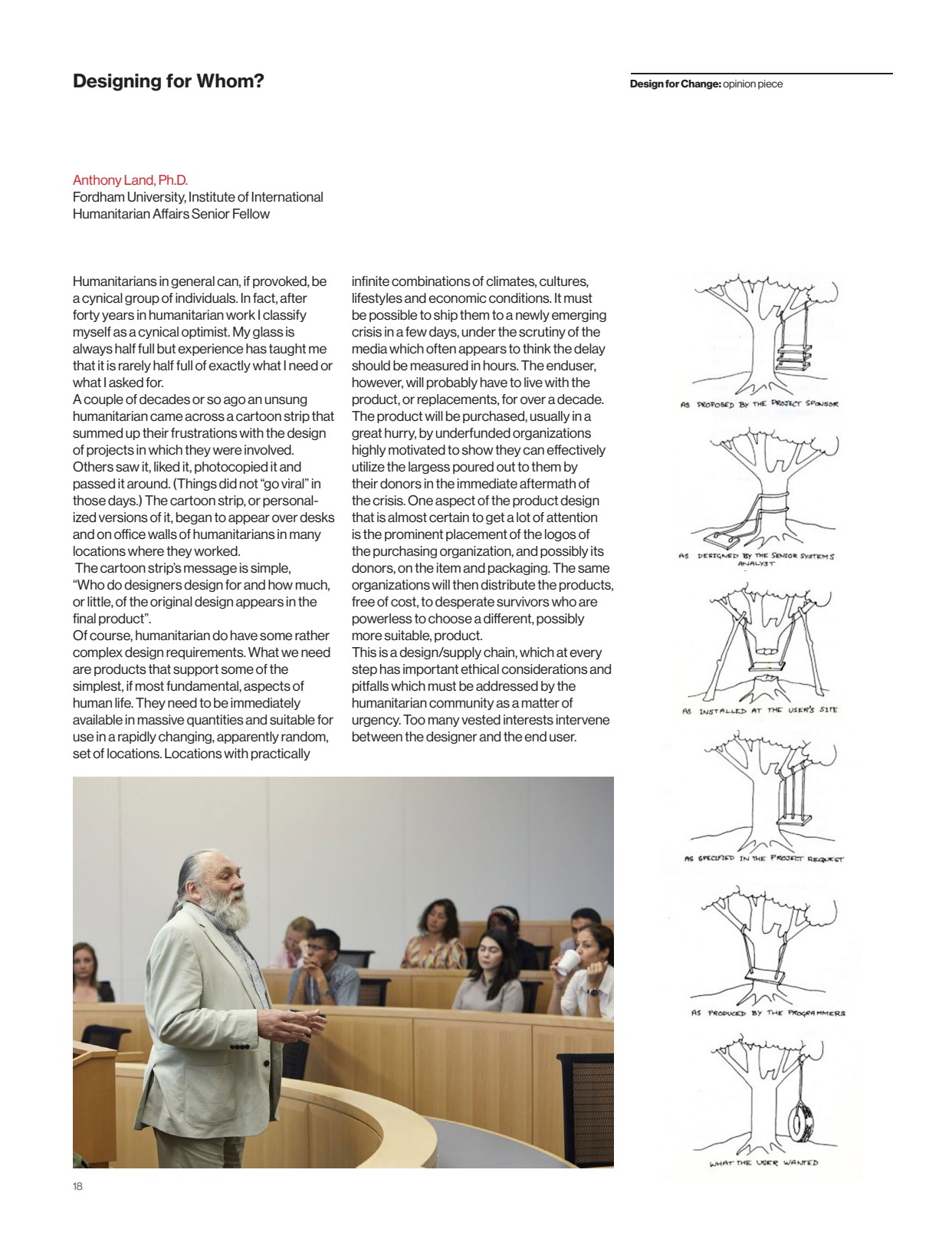
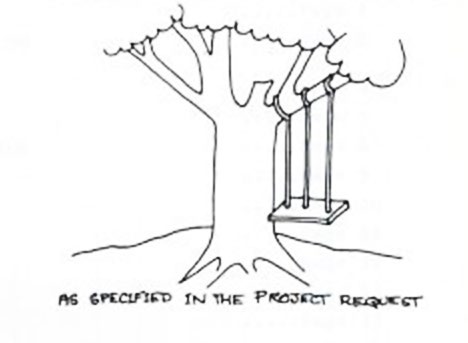
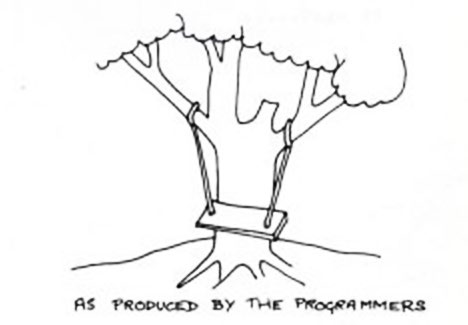
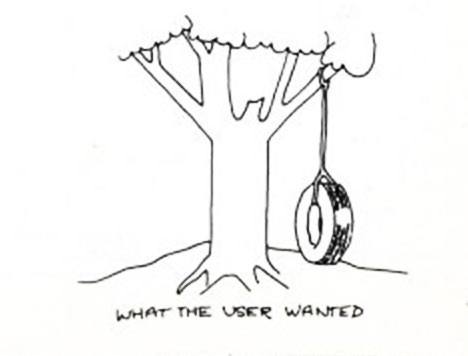
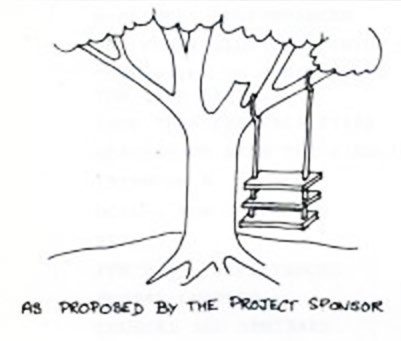
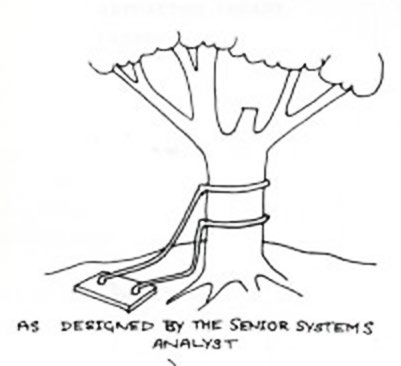
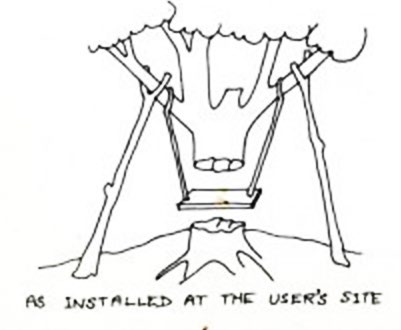
A couple of decades or so ago an unsung humanitarian came across a cartoon strip that summed up their frustrations with the design of projects in which they were involved.
Others saw it, liked it, photocopied it and passed it around. (Things did not “go viral” in those days.) The cartoon strip, or personalized versions of it, began to appear over desks and on office walls of humanitarians in many locations where they worked.
The cartoon strip’s message is simple, “Who do designers design for and how much, or little, of the original design appears in the final product”.
Of course, humanitarian do have some rather complex design requirements. What we need are products that support some of the simplest, if most fundamental, aspects of human life. They need to be immediately available in massive quantities and suitable for use in a rapidly changing, apparently random, set of locations. Locations with practically infinite combinations of climates, cultures, lifestyles and economic conditions. It must be possible to ship them to a newly emerging crisis in a few days, under the scrutiny of the media which often appears to think the delay should be measured in hours. The enduser, however, will probably have to live with the product, or replacements, for over a decade.
The product will be purchased, usually in a great hurry, by underfunded organizations highly motivated to show they can effectively utilize the largess poured out to them by their donors in the immediate aftermath of the crisis. One aspect of the product design that is almost certain to get a lot of attention is the prominent placement of the logos of the purchasing organization, and possibly its donors, on the item and packaging. The same organizations will then distribute the products, free of cost, to desperate survivors who are powerless to choose a different, possibly more suitable, product.
This is a design/supply chain, which at every step has important ethical considerations and pitfalls which must be addressed by the humanitarian community as a matter of urgency. Too many vested interests intervene between the designer and the end user.

Source & original pages
Transcribed for the web and checked against the original yearbook pages. Line wrapping and page layout have been adapted for screen reading; the authors’ wording is retained. Roles, references and descriptions are those of the original publication.
- No creator credit for the six tree-swing cartoons is printed. Original grammatical wording is retained.
View the original page layouts