2018 / article
Design in the Time of War: Rebuilding Mosul
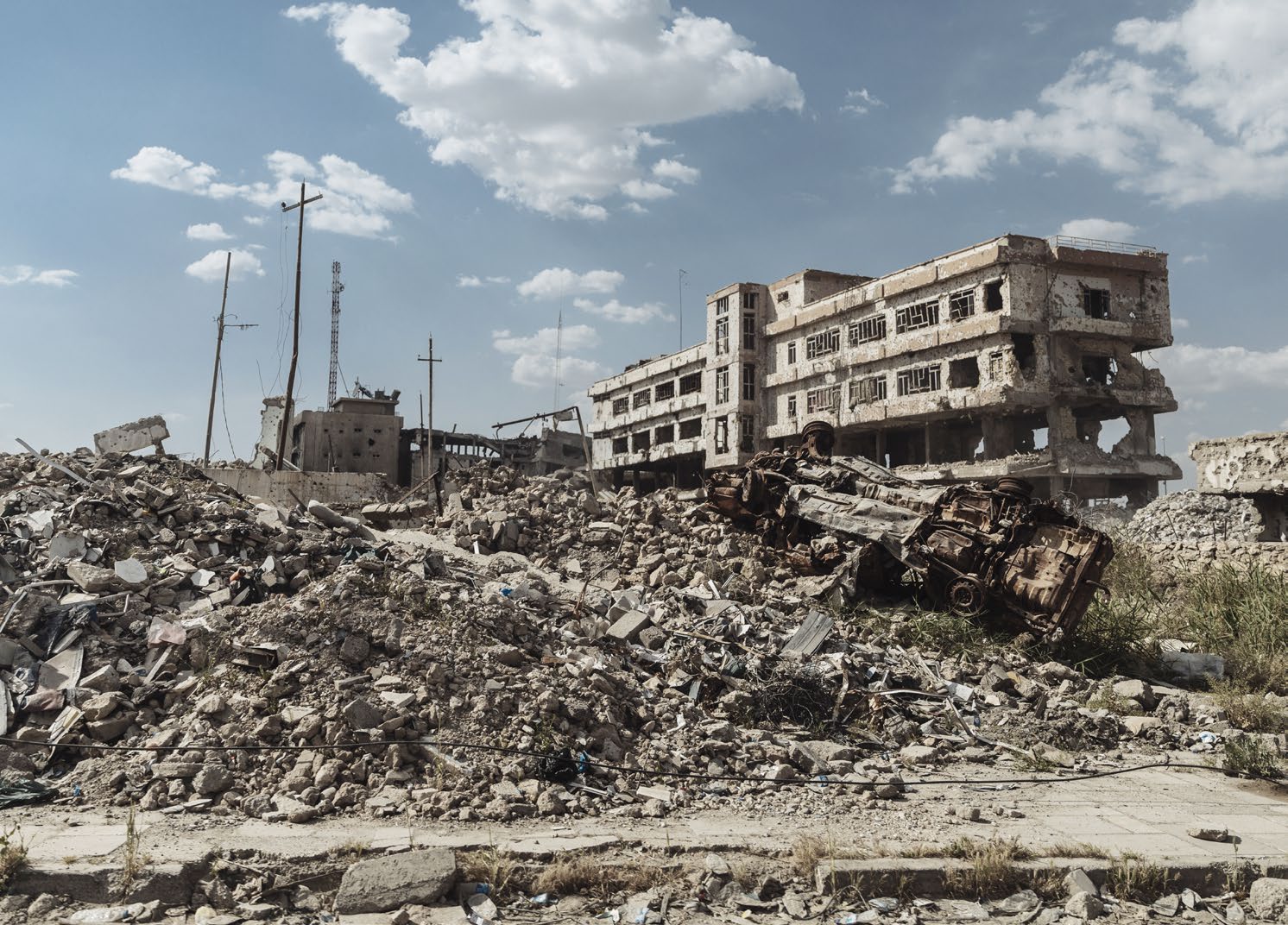
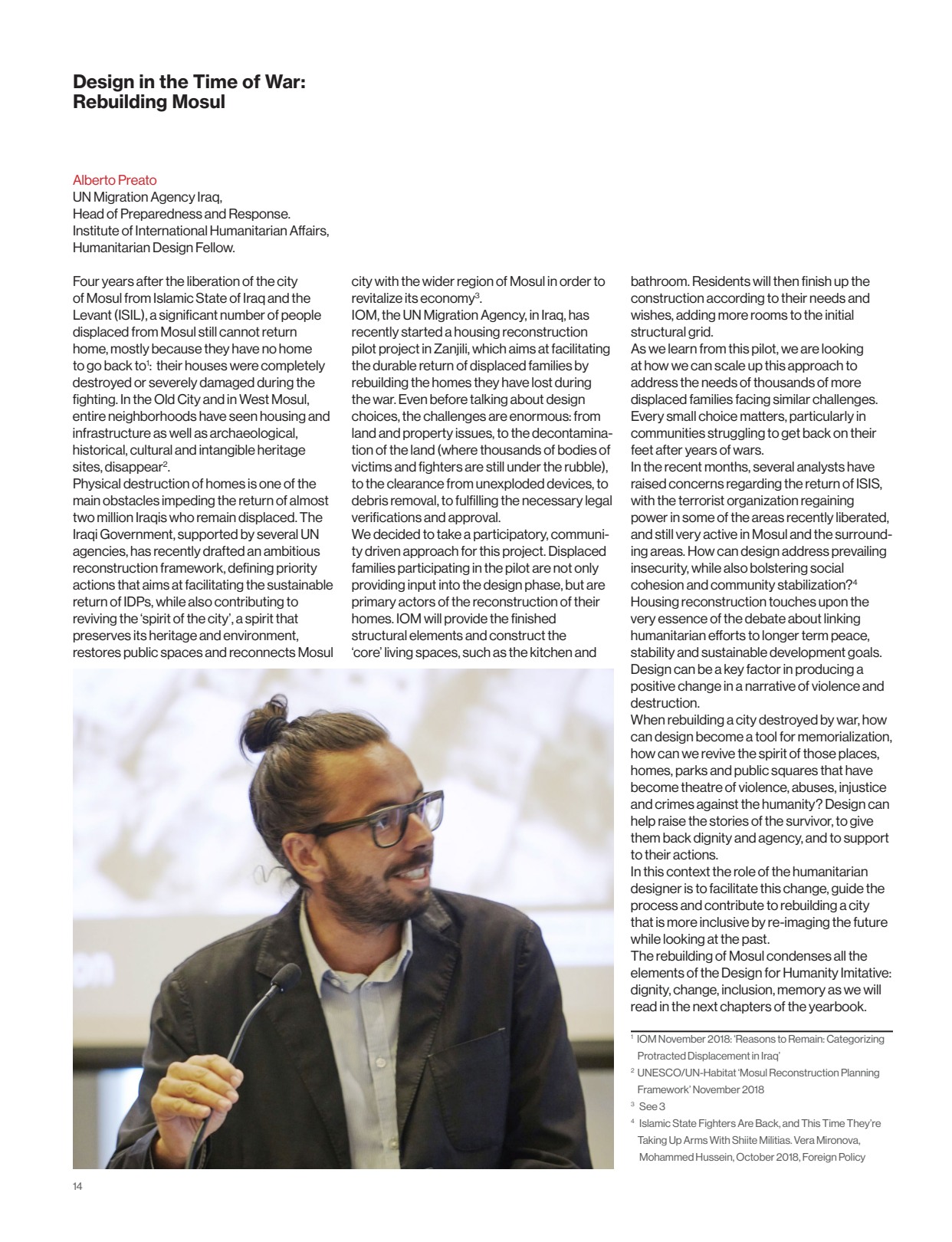
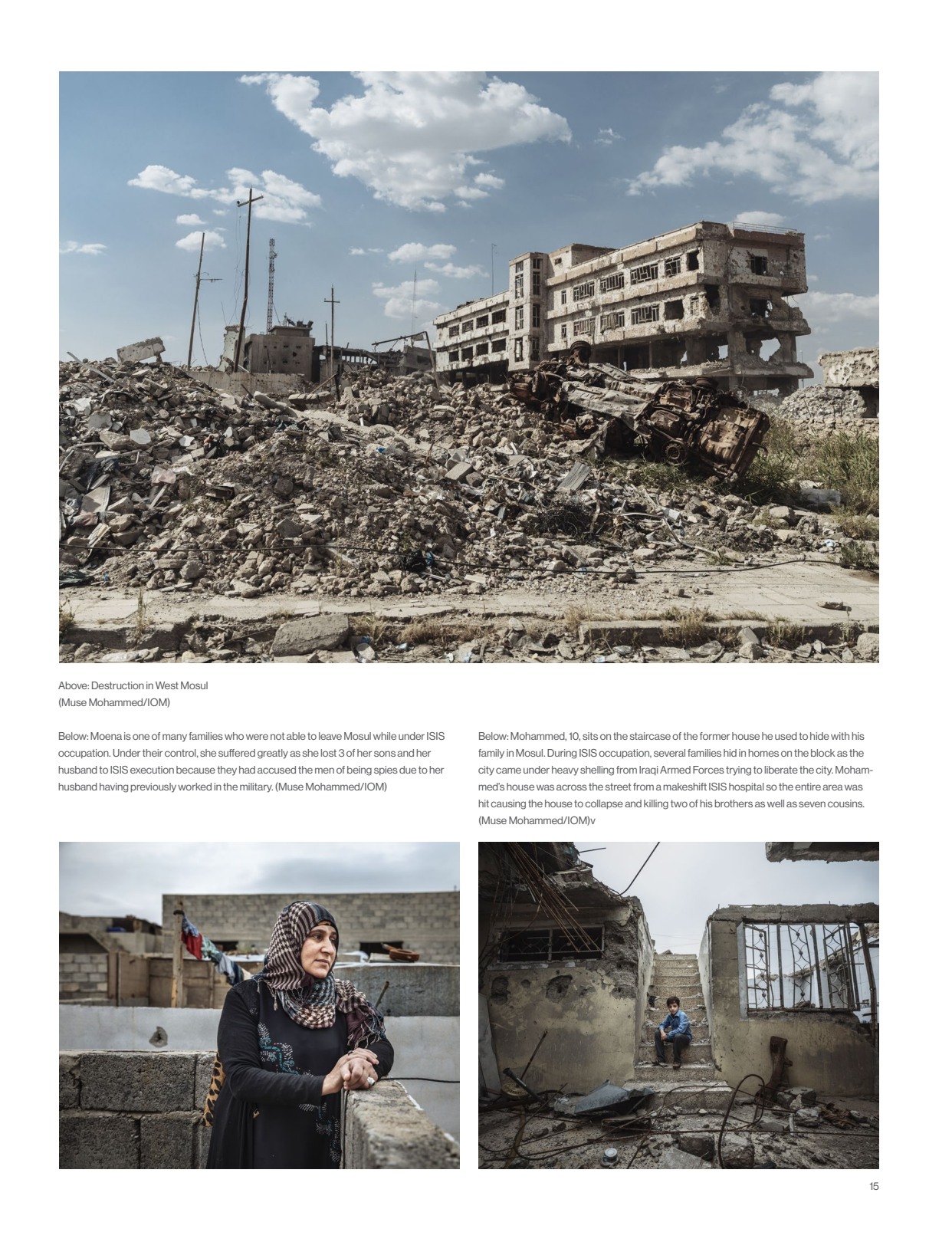
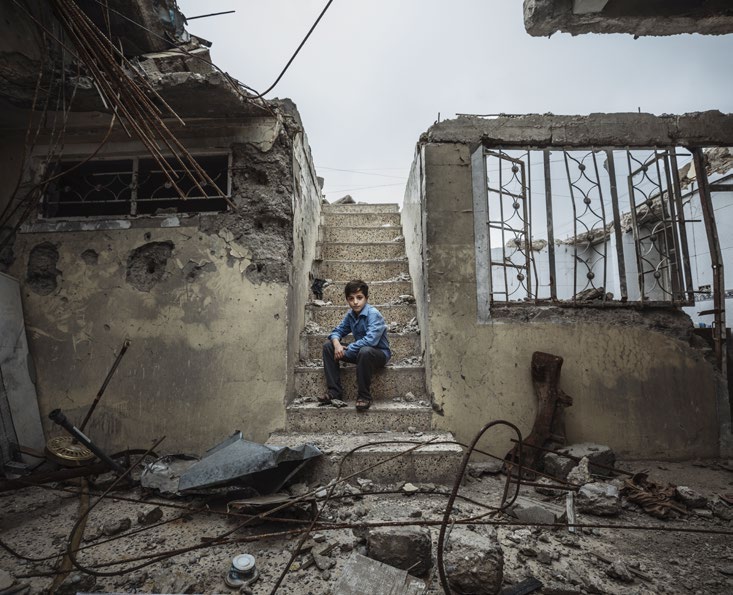
Four years after the liberation of the city of Mosul from Islamic State of Iraq and the Levant (ISIL), a significant number of people displaced from Mosul still cannot return home, mostly because they have no home to go back to[1]: their houses were completely destroyed or severely damaged during the fighting. In the Old City and in West Mosul, entire neighborhoods have seen housing and infrastructure as well as archaeological, historical, cultural and intangible heritage sites, disappear[2].
Physical destruction of homes is one of the main obstacles impeding the return of almost two million Iraqis who remain displaced. The Iraqi Government, supported by several UN agencies, has recently drafted an ambitious reconstruction framework, defining priority actions that aims at facilitating the sustainable return of IDPs, while also contributing to reviving the ‘spirit of the city’, a spirit that preserves its heritage and environment, restores public spaces and reconnects Mosul city with the wider region of Mosul in order to revitalize its economy[3].
IOM, the UN Migration Agency, in Iraq, has recently started a housing reconstruction pilot project in Zanjili, which aims at facilitating the durable return of displaced families by rebuilding the homes they have lost during the war. Even before talking about design choices, the challenges are enormous: from land and property issues, to the decontamination of the land (where thousands of bodies of victims and fighters are still under the rubble), to the clearance from unexploded devices, to debris removal, to fulfilling the necessary legal verifications and approval.
We decided to take a participatory, community driven approach for this project. Displaced families participating in the pilot are not only providing input into the design phase, but are primary actors of the reconstruction of their homes. IOM will provide the finished structural elements and construct the ‘core’ living spaces, such as the kitchen and bathroom. Residents will then finish up the construction according to their needs and wishes, adding more rooms to the initial structural grid.
As we learn from this pilot, we are looking at how we can scale up this approach to address the needs of thousands of more displaced families facing similar challenges.
Every small choice matters, particularly in communities struggling to get back on their feet after years of wars.
In the recent months, several analysts have raised concerns regarding the return of ISIS, with the terrorist organization regaining power in some of the areas recently liberated, and still very active in Mosul and the surrounding areas. How can design address prevailing insecurity, while also bolstering social cohesion and community stabilization?[4] Housing reconstruction touches upon the very essence of the debate about linking humanitarian efforts to longer term peace, stability and sustainable development goals.
Design can be a key factor in producing a positive change in a narrative of violence and destruction.
When rebuilding a city destroyed by war, how can design become a tool for memorialization, how can we revive the spirit of those places, homes, parks and public squares that have become theatre of violence, abuses, injustice and crimes against the humanity? Design can help raise the stories of the survivor, to give them back dignity and agency, and to support to their actions.
In this context the role of the humanitarian designer is to facilitate this change, guide the process and contribute to rebuilding a city that is more inclusive by re-imaging the future while looking at the past.
The rebuilding of Mosul condenses all the elements of the Design for Humanity Imitative: dignity, change, inclusion, memory as we will read in the next chapters of the yearbook.
- 1 IOM November 2018: ‘Reasons to Remain: Categorizing Protracted Displacement in Iraq’
- 2 UNESCO/UN-Habitat ‘Mosul Reconstruction Planning Framework’ November 2018
- 3 See 3
- 4 Islamic State Fighters Are Back, and This Time They’re Taking Up Arms With Shiite Militias. Vera Mironova, Mohammed Hussein, October 2018, Foreign Policy
Source & original pages
Transcribed for the web and checked against the original yearbook pages. Line wrapping and page layout have been adapted for screen reading; the authors’ wording is retained. Roles, references and descriptions are those of the original publication.
- Original “Four years after the liberation”, “Design for Humanity Imitative” and footnote “3 See 3” are retained as printed; no factual/typographical rewriting was made.
- A stray “v” after the final page-15 photo credit was excluded as a layout artefact.
View the original page layouts