2018 / article
Design for the Public Interest
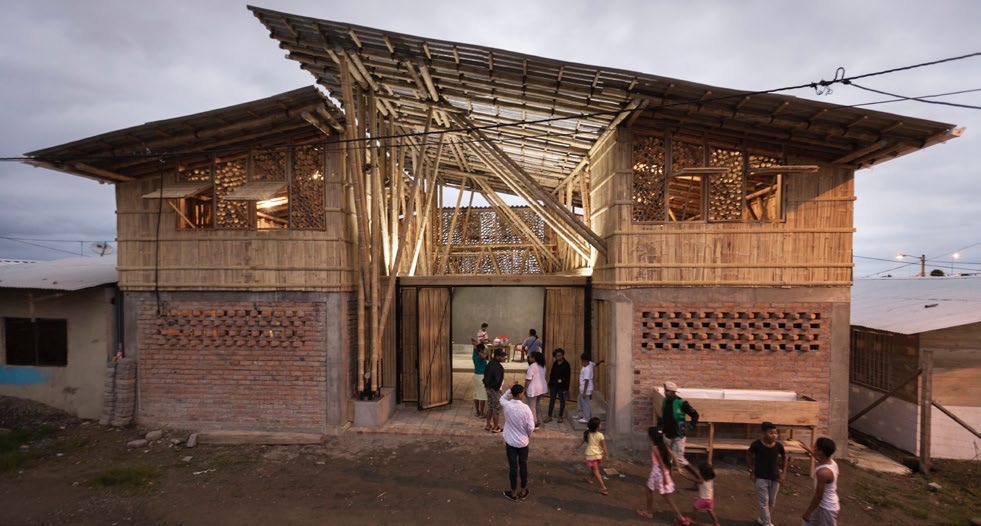
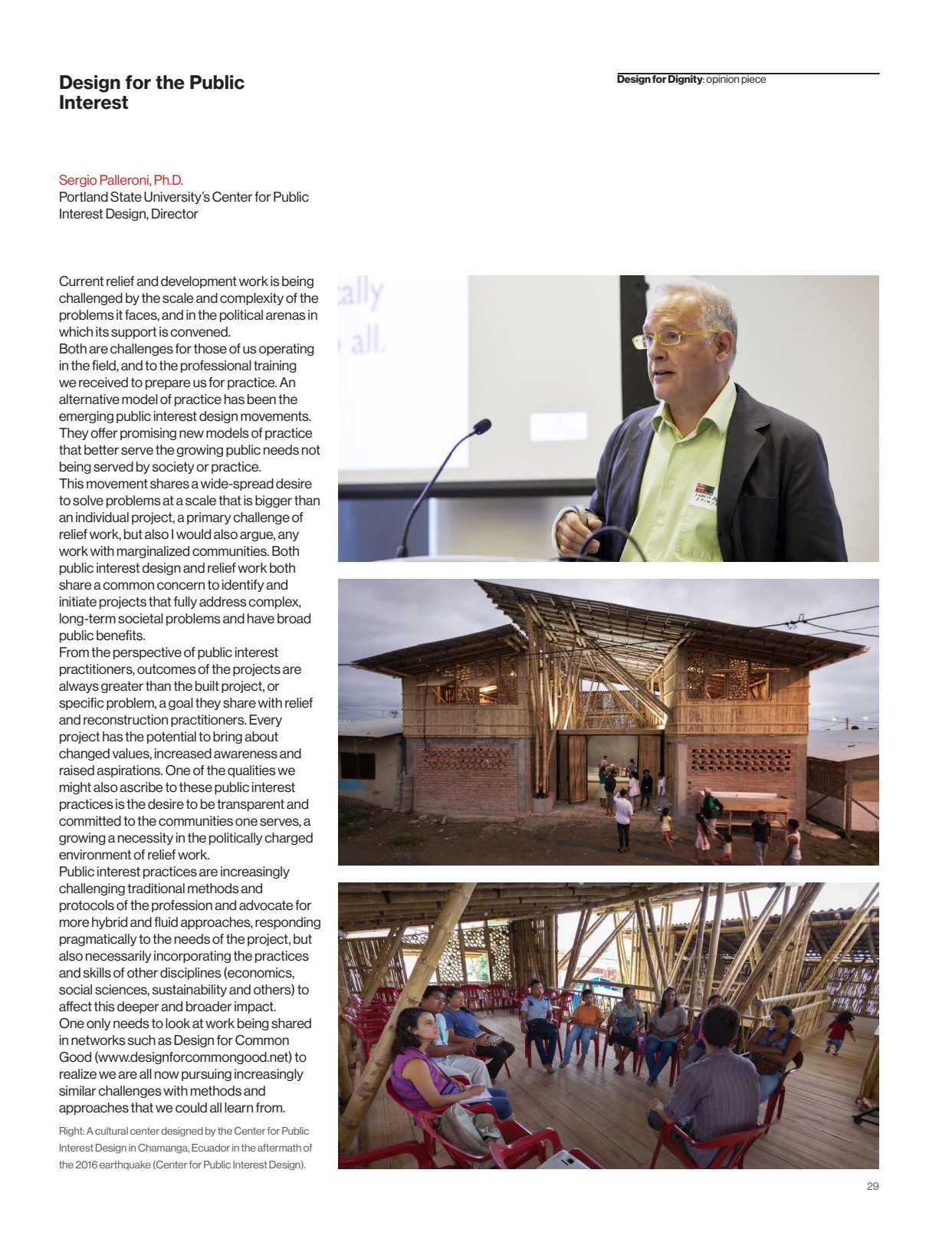
Current relief and development work is being challenged by the scale and complexity of the problems it faces, and in the political arenas in which its support is convened.
Both are challenges for those of us operating in the field, and to the professional training we received to prepare us for practice. An alternative model of practice has been the emerging public interest design movements.
They offer promising new models of practice that better serve the growing public needs not being served by society or practice.
This movement shares a wide-spread desire to solve problems at a scale that is bigger than an individual project, a primary challenge of relief work, but also I would also argue, any work with marginalized communities. Both public interest design and relief work both share a common concern to identify and initiate projects that fully address complex, long-term societal problems and have broad public benefits.
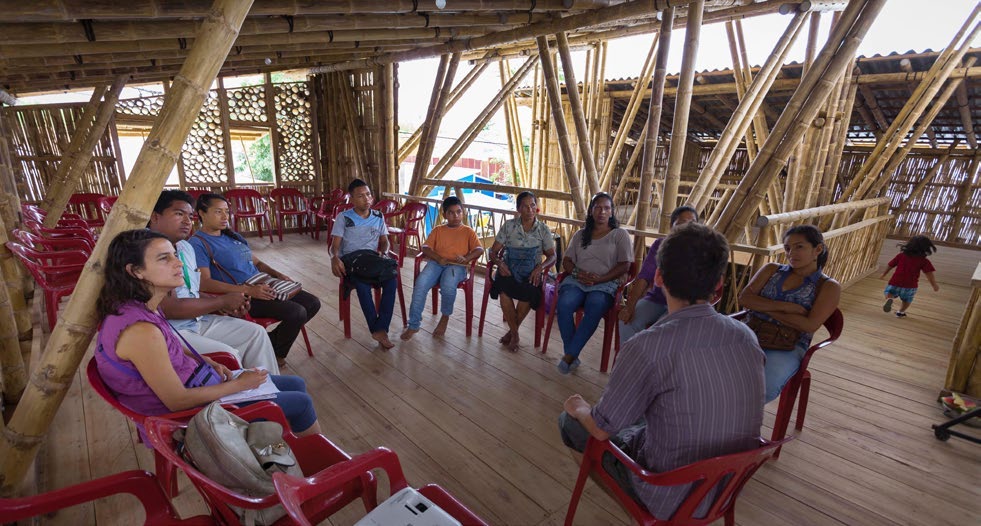
From the perspective of public interest practitioners, outcomes of the projects are always greater than the built project, or specific problem, a goal they share with relief and reconstruction practitioners. Every project has the potential to bring about changed values, increased awareness and raised aspirations. One of the qualities we might also ascribe to these public interest practices is the desire to be transparent and committed to the communities one serves, a growing a necessity in the politically charged environment of relief work.
Public interest practices are increasingly challenging traditional methods and protocols of the profession and advocate for more hybrid and fluid approaches, responding pragmatically to the needs of the project, but also necessarily incorporating the practices and skills of other disciplines (economics, social sciences, sustainability and others) to affect this deeper and broader impact.
One only needs to look at work being shared in networks such as Design for Common Good (www.designforcommongood.net) to realize we are all now pursuing increasingly similar challenges with methods and approaches that we could all learn from.
Source & original pages
Transcribed for the web and checked against the original yearbook pages. Line wrapping and page layout have been adapted for screen reading; the authors’ wording is retained. Roles, references and descriptions are those of the original publication.
View the original page layouts