
Alberto Preato / Essay
A shelter is delivered. A home keeps changing.
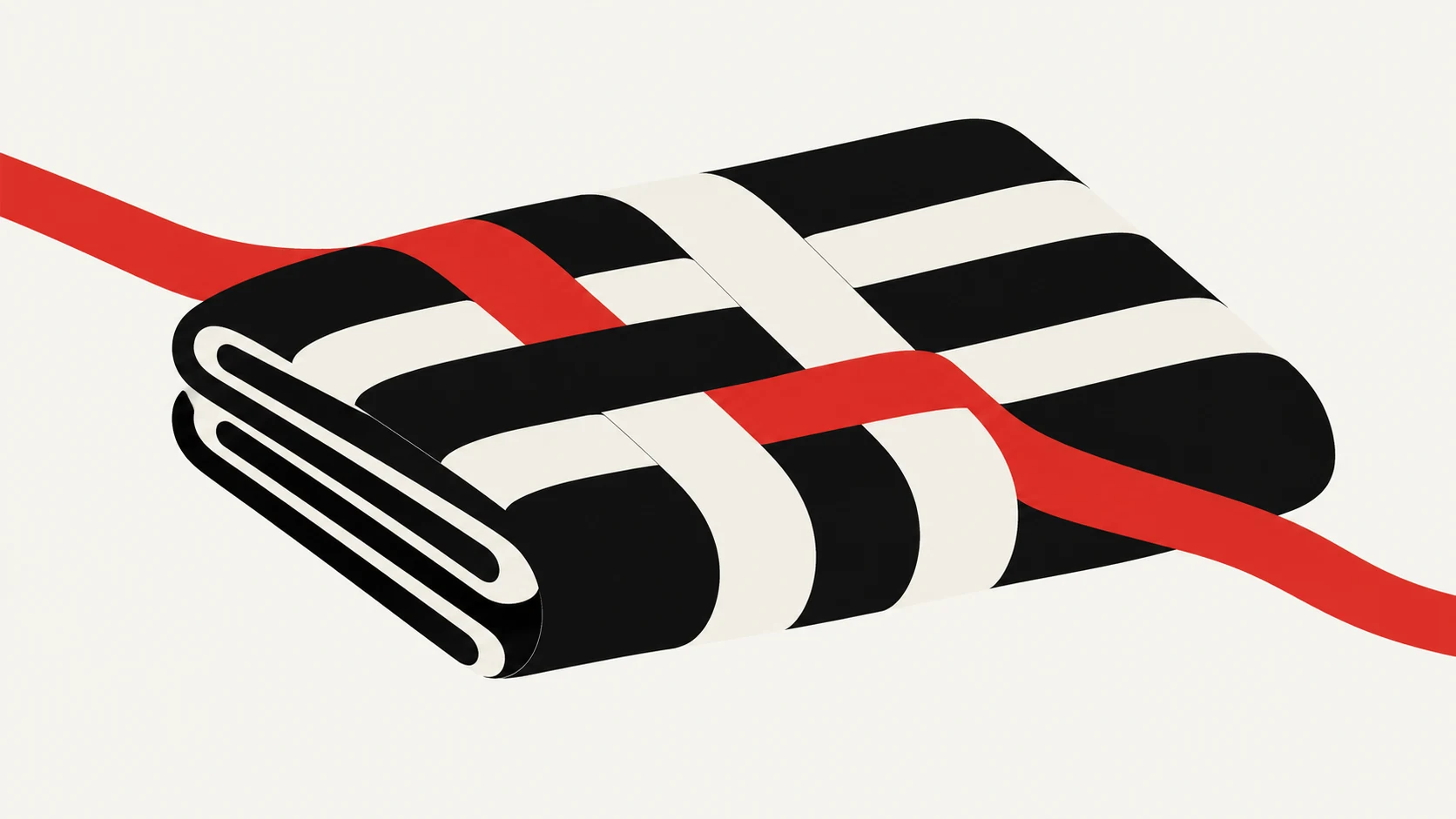
Illustrations by Alberto Preato, created with AI assistance for Design for Humanity, 2026.
Selected D4H illustration; the original LinkedIn edition retains its full image sequence.
Republished with the author’s permission from LinkedIn. The original text and links are preserved. References to the call for contributions describe its status at publication; the call closed on 31 October 2026.
What happens when humanitarian design moves beyond the object.
One of the things I remember most clearly from the early #Design4Humanity conversations was how different the people in the room were. Humanitarian organizations were sitting alongside architects and urbanists, but also technology companies, social enterprises, academics, artists and private-sector actors. Some were designing shelters. Others were working on platforms, information, services, public space, logistics, data, or different ways of welcoming and supporting people on the move.
From the beginning, Design for Humanity was interested in a fairly simple question: what changes when we stop thinking of humanitarian design only as the design of things, and start thinking about the design of possibilities?
Different problems, different things to design
Better Shelter is perhaps one of the clearest examples of product design entering humanitarian response at scale. Developed with UNHCR, the UN Refugee Agency IKEA Foundation its modular shelter had to address a difficult combination of requirements: transportability, speed, safety, durability and adaptability. Nearly 100,000 shelters have since been deployed across more than 90 countries, serving not only as temporary homes but also as classrooms, clinics and other community spaces. Better Shelter
What I find interesting is that the innovation is not only in the shelter itself. It is also in manufacturing, logistics, standardisation and the ability to move something through a global humanitarian supply system quickly enough to matter.
The design problem is therefore larger than the object: how do you create something that can travel, scale and still leave room for adaptation once it arrives?
Airbnb approached a similar human need from almost the opposite direction. The idea began when an Airbnb.org host offered her home free to people affected by Hurricane Sandy in 2012. What started as an individual act eventually developed into a system linking people in crisis with existing accommodation, hosts and local partner organisations.
Here the design object is not a new shelter. It is access to housing that already exists.
#CasaAzul began somewhere else again. Developed by TAMassociati with Institute of International Humanitarian Affairs and IOM - UN Migration in the context of Venezuelan migration, Casa Azul was conceived as a flexible design playbook rather than a standard building: a modular system combining welcome, information, culture, rest, food, community space and local identity, adaptable to different sites, budgets and existing structures. The project was later included in Cooper Hewitt, Smithsonian Design Museum #Designing_Peace exhibition curated by Cynthia E. Smith.
The architecture mattered, but it was carrying something larger: the idea that spaces along migration routes could do more than process needs efficiently. They could communicate welcome, dignity and belonging.
Three responses to displacement. One starts with a manufactured object. One with a digital platform and existing housing capacity. One with an adaptable spatial and cultural system.
None is a universal answer. That is precisely what makes them interesting.
Sometimes the design is less visible
Other approaches push this even further. Cash assistance, where markets and protection conditions make it appropriate, changes who makes the decision. Rather than an organisation deciding exactly what a household should receive, part of that choice moves back to the household itself. UNHCR explicitly links that flexibility with dignity, choice and the ability to prioritise needs. UNHCR
In that sense, the thing being designed is partly choice within the system.
Information offers another example. @Humanitarian OpenStreetMap Team has built an entire model around collaboratively generated, open geospatial information, working with local communities, governments, volunteers and humanitarian organisations rather than treating mapping as something produced only by external experts. LinkedIn
A map is obviously a designed artefact. But the more interesting question is often who gets to produce it, what becomes visible, and who can use that information afterwards.
The What Design Can Do Refugee Challenge made this breadth particularly visible. Run with UNHCR and IKEA Foundation, it attracted 631 proposals from 70 countries. The five selected projects ranged from biodegradable shelter to a welcome card using digital technology, a storytelling platform, food as a vehicle for social connection, and a network connecting refugee and local makers. One humanitarian challenge generated completely different forms of design.
That feels much closer to the reality of humanitarian innovation than the idea that there should be one design solution.
And then people move
Over time, my own work moved increasingly into #human_mobility, and the design question became broader again.
In #Niger, the geography of the response was made of routes, transit centres, information, assistance, return and reintegration. Across the Venezuela response, people were moving through towns, cities and countries, and the questions were increasingly about reception, documentation, services, livelihoods, housing markets and urban incorporation.
In Vanuatu, climate and disaster risk brought evacuation, displacement, return and the possibility of planned relocation into the same conversation. In stabilization and recovery contexts such as Haiti and Iraq, the question eventually became not only how people move, but what makes staying possible again.
We often organise these experiences into different sectors and phases: emergency response, displacement, recovery, integration, return, stabilization, climate adaptation. For the person living through them, they may simply be different moments in the same trajectory.
That has gradually changed the way I think about design.
A transit centre is not just a temporary building. Its location, layout, information and connections can influence what happens next. A registration system is not merely administrative if it determines access to assistance or services. A return programme may reconstruct houses while livelihoods and transport remain absent. Stabilization can restore infrastructure without necessarily restoring the relationships and institutions that make everyday life viable.
And #planned_relocation makes the issue especially visible. On paper, relocation can appear almost physical: identify a risk, find a safer location, provide housing and infrastructure, and move.
But places contain much more than buildings.
Livelihoods, social networks, memory, identity, access to land and the relationships through which everyday life works do not simply transfer to a new site.
This was one of the questions we explored in a recent paper on climate-related planned relocation at the Munich Re Foundation #Climate_Academy drawing on the experience of 29 researchers, practitioners and policymakers. We found recurring tensions around how risk and habitability are defined, how consultation becomes meaningful community ownership, and how short-term or siloed policy and funding systems struggle with a process that is inherently long-term. Springer Link
The question is therefore not only how to design a safer destination. It is how to support a transition in which people can rebuild a workable life.
And even that requires some humility about the word design. Relocation, integration or stabilization are never designed by professionals alone. They evolve through households and communities, governments, markets, institutions and places themselves.
In that sense, I have come to think that mobility itself is partly designed: not because movement can or should be controlled as a neat process, but because the systems around it can widen or narrow people’s choices, make transitions easier or harder, and make places more or less possible to inhabit.
People continue the design
This brings me back to the shelter.
In Haiti, Vanuatu, Iraq and elsewhere, I often saw people change what had been provided once the formal project was complete. They created shade, altered entrances, divided spaces differently, made room for work or social life, added privacy, reused materials and adapted outdoor spaces.
The original design became the starting point for another design process.
Not every alteration is evidence of success. Sometimes people are fixing something that did not work. At other times they are responding to needs that no project could fully have anticipated. Often the distinction is less clear.
What interests me is therefore less whether people preserved the original design than what the design allowed them to do with it.
That same question can be asked of many of the examples above.
Can a shelter be safely adapted? Can a platform unlock resources that already exist? Can cash expand meaningful choices? Can a map be produced and used by the communities it represents? Can a welcome space change as migration routes and local needs change?
Good design does not always mean resolving everything. Sometimes it means creating a strong enough framework within which other people can continue shaping the answer. That might be a building. It might be access to an existing resource. It might be information, a financial mechanism, a public space, a platform or a relationship between people and institutions.
The common thread is not the object. It is the possibility created by the design.
From designing responses to designing possibilities
Looking back, I think this was already present in the early Design for Humanity conversations.
The second Summit spoke about moving “From Camps to Communities” and “From Data to Stories.” What interested me then, and perhaps even more now, was the possibility of moving between very different scales of design: an object, a room, a settlement, a platform, a route, a piece of information or a relationship between people and institutions.
The point is not to stretch the word design until everything becomes design. It is to notice where choices have already shaped the way people experience a system, and to ask whether those choices can create more possibilities rather than close them down. A shelter can be delivered, but a home keeps changing. So do neighbourhoods, routes, services, institutions and the circumstances around people’s lives.
What can we design that gives people more room to shape what happens next?
That is one of the questions I hope we can continue exploring through the Design for Humanity Journal at the Institute of International Humanitarian Affairs of Fordham University.
I would be interested in hearing from others: what is the most interesting humanitarian “design” you have encountered that was not primarily a building or an object?
Read more about the call for contributions -> Design4Humanity – IIHA